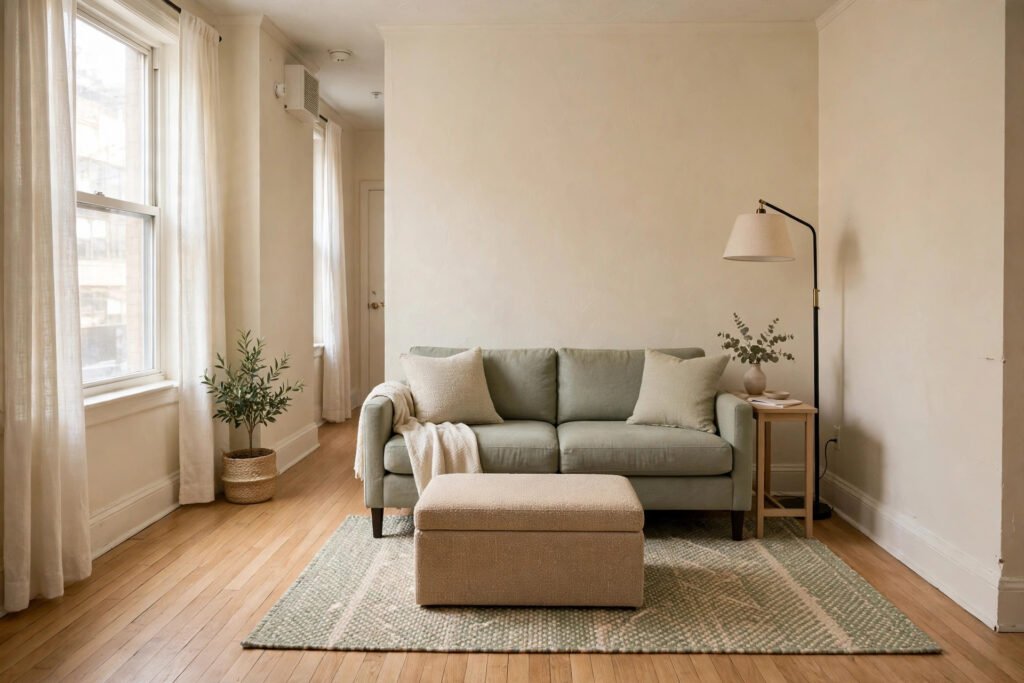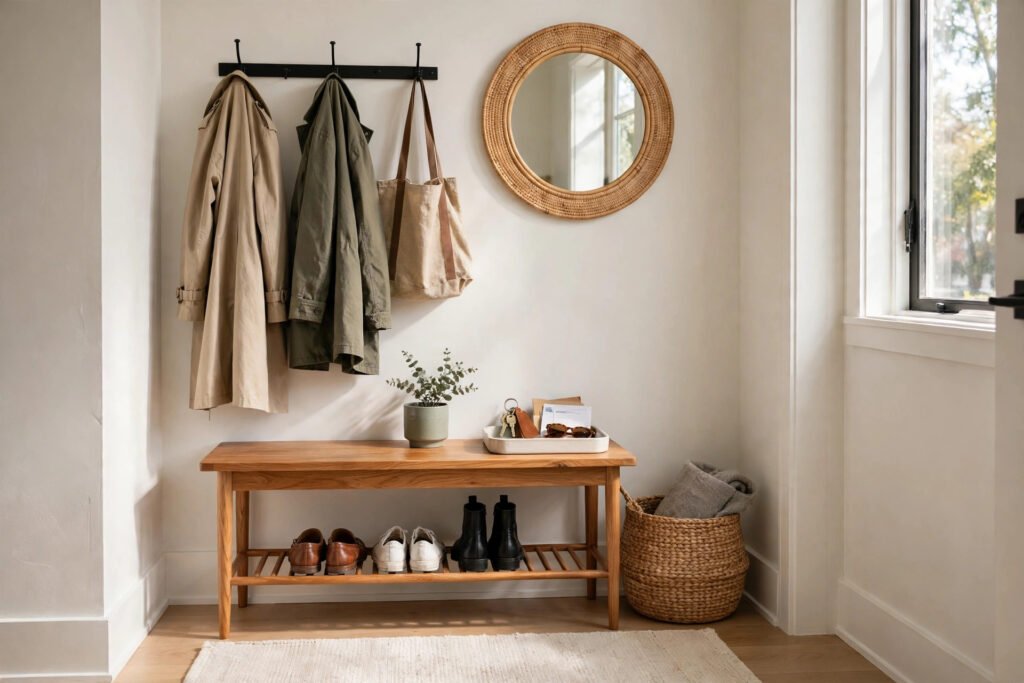
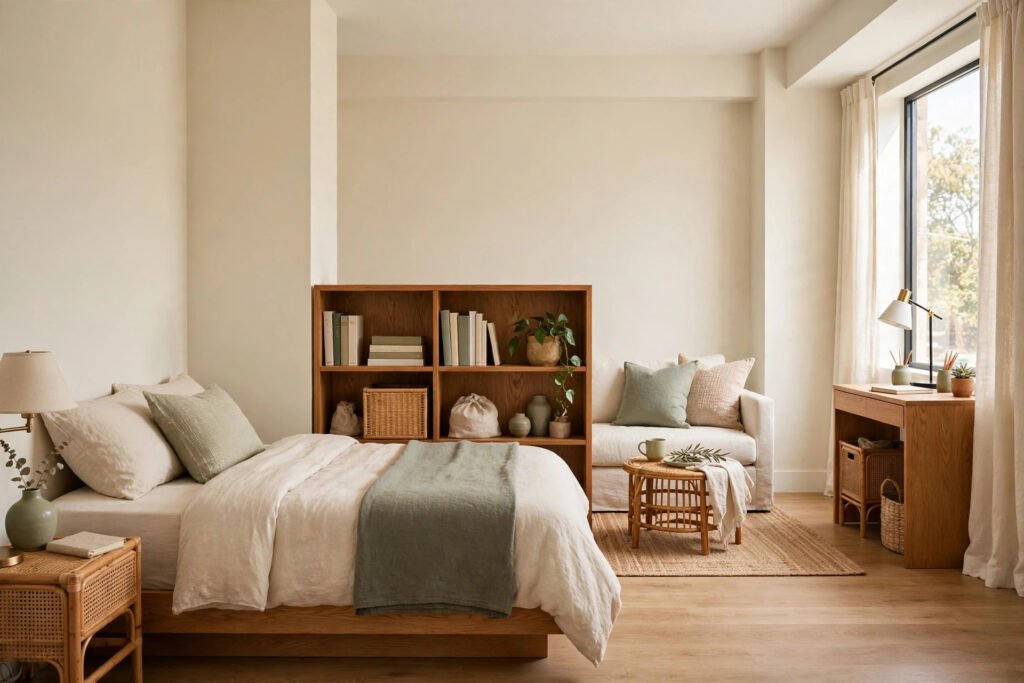
A studio can feel restful, productive, and social at the same time, but only when each activity has a clear place. The best studio apartment room divider ideas without walls do not try to fake extra rooms. They create visual boundaries, protect walkways, and give your bed, desk, and sofa enough separation that the whole home feels calmer.
Start by deciding where you sleep, work, and relax. Then choose a divider that supports those zones. For renters, the strongest options are freestanding and movable: an open bookshelf, a tension-rod curtain, a folding screen, a sofa backed by a console, or a mix of rugs, plants, and lighting.
Start With Three Zones, Not a Divider
Before moving furniture, sketch the studio as three simple zones. The sleep zone needs the quietest corner, ideally away from the entry door and kitchen traffic. The living zone works best near the main window or the wall where a sofa naturally fits. The work zone should sit close to natural light and an outlet, but it should not block the path to the bathroom or front door.
Keep the zones in a logical order. In many studios, the bed belongs at the far end, the living area in the middle, and the desk near a window or beside the sofa.
If your studio is also your main living room, our guide to a small living room layout for a narrow apartment can help you place the sofa and rug before you add a divider.
Measure Walkways and Clearances First
Dividers fail when they steal the path through the room. Measure the full space, including door swings, window access, radiators, vents, outlets, and the route from the entry to the kitchen and bathroom. Keep the main walkway about 30 to 36 inches wide. A secondary gap of 24 to 30 inches can work beside a bed or desk, but the route you use every day should feel easy, not like a squeeze.
Leave a clear exit path to the front door and keep windows reachable. Do not place a tall divider in front of a radiator, heat vent, air-conditioning unit, or smoke detector. If a divider is placed perpendicular to a wall, leave a walk-through gap at one end instead of sealing the room into two awkward halves.
A simple zoning sequence
- Mark the entry path and keep it open.
- Place the bed in the quietest corner.
- Anchor the living zone with the sofa and rug.
- Put the desk where light and outlets already make sense.
- Add the divider last, then test every route again.
Choose the Right Divider for Your Studio
Open bookshelf divider
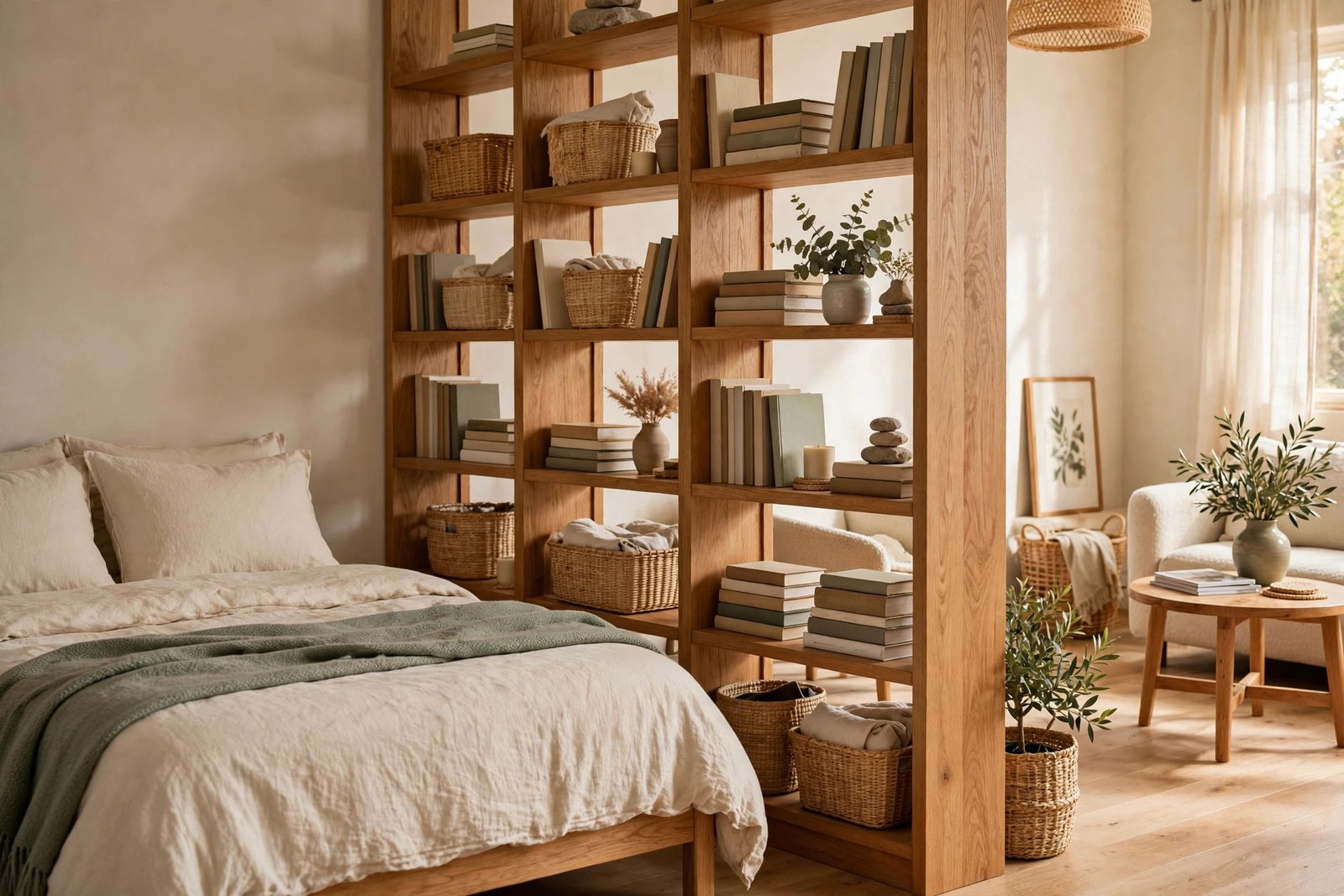
An open bookshelf is one of the most useful studio dividers because it separates the bed from the living area while adding storage. Choose a low, wide, stable unit rather than a tall narrow one. Style it lightly with books, baskets, and a plant so light still passes through. Keep heavy items on lower shelves, and avoid overloading the top.
Stability matters. The shelf should not wobble when you brush past it. If drilling is not allowed, choose a lower, wider shelf, keep heavy items low, and avoid breakable items near the edge.
Tension-rod curtain divider
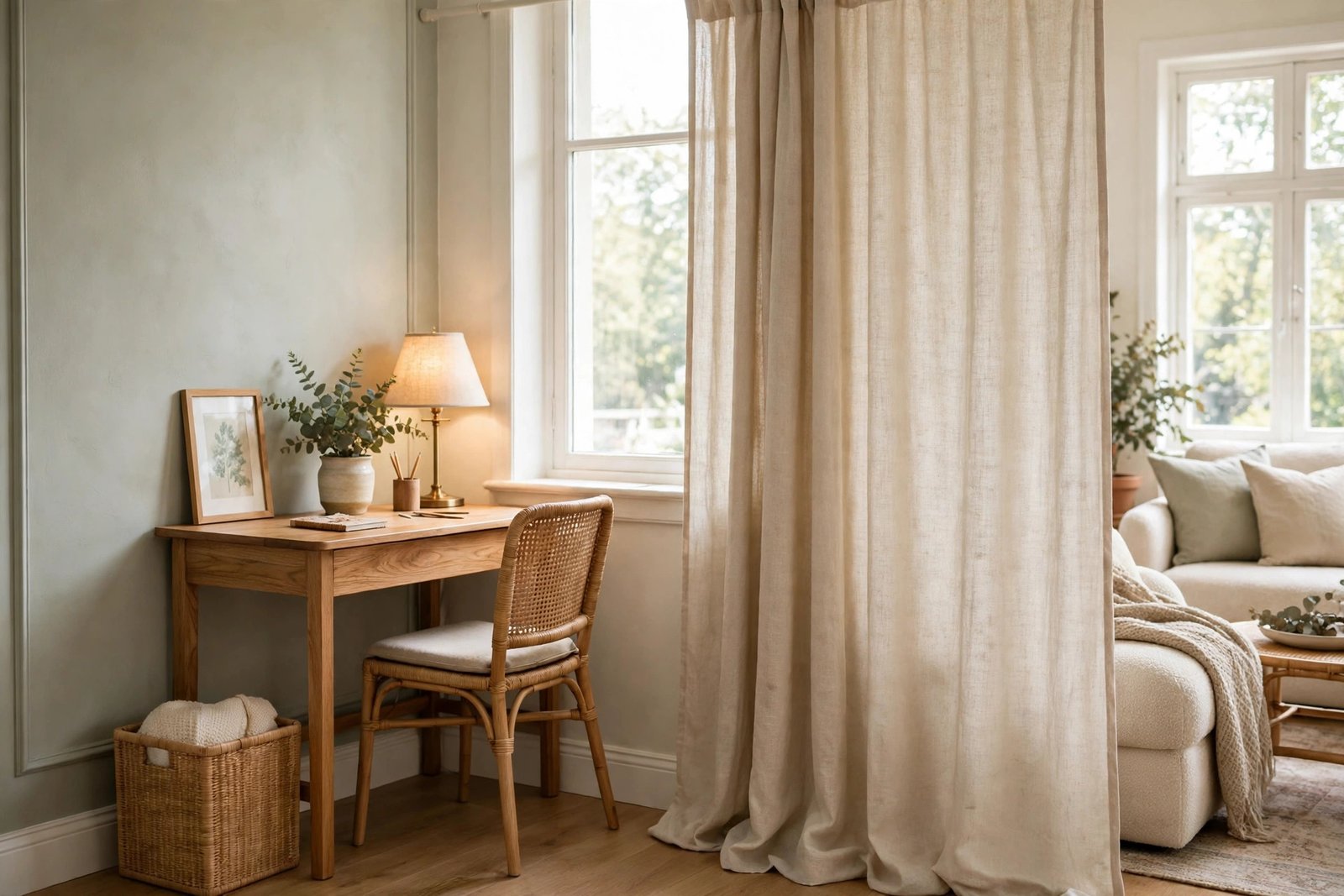
A curtain on a tension rod is a strong renter-friendly option when you need privacy more than storage. It works well around a bed or behind a desk, especially in a studio where the sleep area is visible from the sofa. Pick a washable linen or cotton curtain that hangs straight and does not puddle on the floor. A light color keeps the room bright, while a slightly heavier fabric gives more visual privacy.
Measure the rod span carefully, leave clearance for the curtain to open, and keep fabric away from heaters and cooking areas.
Folding screen
A folding screen is flexible and easy to move when guests come over. It suits renters who want a quick visual break without committing to furniture placement. Choose a screen that is tall enough to hide the bed from the sofa, but not so wide that it turns the walkway into a maze. Woven, wood, or fabric panels can soften the room without blocking all the light.
Sofa back plus console
In an open studio, the back of the sofa can become the divider. Float the sofa only if the walkway stays clear, then place a slim console or low shelf behind it. This creates a living zone in front and a sleep or work zone behind, while the console gives you a place for lamps, books, or a charging tray.
Rugs, plants, and lighting
Not every zone needs a physical divider. A rug under the sofa defines the living area, a smaller rug beside the bed softens the sleep zone, and a desk mat or low-pile rug can mark the work corner. Tall plants can screen a view without closing the room, as long as they do not block light or narrow the path.
Lighting finishes the separation. Use warmer light around 2700K in the sleep zone, a focused desk lamp for work, and a floor or table lamp near the sofa. When each zone has its own light source, the studio feels layered instead of flat.
Layout Examples by Studio Size
Compact studio
Use one divider only. A low bookshelf beside the bed can separate sleep from living space, while a small desk by the window and a rug under the sofa complete the zones.
Long rectangular studio
Divide the room lengthwise: sleep at the far end, living in the middle, and work near the window. Place the divider perpendicular to the long wall with a clear gap at one end.
Square or open studio
Use the sofa as the anchor, put the bed in the quietest corner, and place the desk along a wall with good light. A curtain can hide the bed when needed.
If clothing storage is spilling into every zone, pair the divider plan with our guide to organizing a small bedroom with no closet so the sleep zone stays calm.
Make Each Zone Feel Finished
A divider works better when the zones have their own small cues. The sleep zone should look quiet: simple bedding, a bedside surface, and warm low light. The work zone should look ready: chair tucked in, cables contained, and only the items you use daily on the desk. The living zone should invite sitting down: sofa cushions in place, a small table within reach, and a rug that fits the seating area.
Repeat one or two materials across the studio so the zones feel connected. Honey oak, rattan, linen, and muted sage can appear in small doses without making the room busy. For seasonal warmth without adding clutter, see our cozy winter apartment ideas for renters.
Renter-Friendly Rules That Protect Your Deposit
Choose dividers that can be removed without patching holes. Tension rods, freestanding shelves, folding screens, and furniture placement are usually safer than mounted tracks or built-in partitions. Check your lease before using adhesive hooks, ceiling hardware, or wall anchors.
Protect floors with felt pads under shelves, screens, and console legs. Keep dividers away from sprinkler heads, detectors, vents, and heaters. If a piece feels unstable, do not use it as a room divider in a walkway.
Common Mistakes
- Blocking the only clear path to the door, bathroom, or kitchen.
- Using a tall, narrow shelf that can tip or wobble.
- Sealing the room completely instead of leaving a walk-through gap.
- Placing a curtain or screen in front of a radiator or vent.
- Adding three dividers when one strong boundary would work.
- Letting the desk face the bed with no visual break.
- Using rugs that are too small to define a zone.
FAQ
What is the best room divider for a studio apartment?
An open bookshelf is often the most practical choice because it adds storage and separation. A tension-rod curtain is better when privacy matters most, and a folding screen is best when you want flexibility.
How wide should the walkway be in a studio?
Keep the main walkway about 30 to 36 inches wide when possible. Secondary gaps can be 24 to 30 inches, but the route to the door, kitchen, and bathroom should stay clear.
Can I divide a studio without drilling?
Yes. Use a freestanding bookshelf, folding screen, sofa-and-console arrangement, or a curtain on a tension rod. Always check your lease before using adhesives or hardware.
Should the divider reach the ceiling?
Not usually. A divider that stops below the ceiling keeps light and air moving and makes the studio feel less boxed in. Full-height curtains can work for privacy, but they should not block vents, windows, or exits.
Conclusion
Protect the walkway first, place the bed, sofa, and desk with care, then add one divider that fits the way you live. With clear paths and lighting that changes by zone, a studio can feel organized and calm without a new wall.