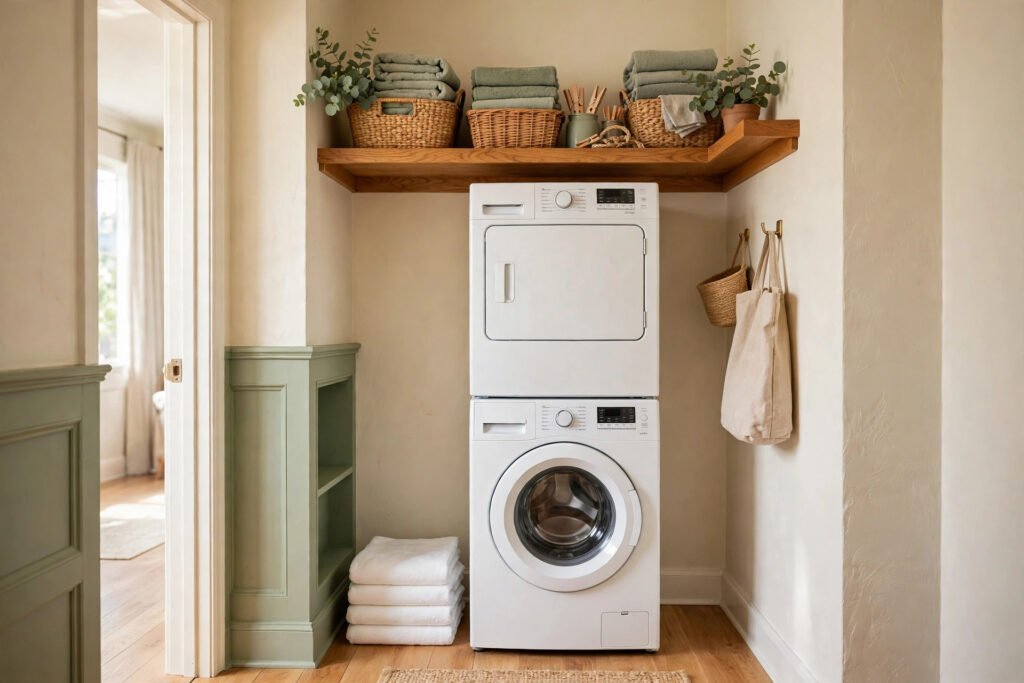
A laundry closet asks a lot from a very small footprint. The machines need room to breathe, hoses and vents need space behind them, and you still need detergent, stain spray, baskets, and a place to sort socks that seem to multiply on their own. Good small laundry closet organization around a stacked washer and dryer starts with respecting those clearances, then claiming every usable inch around the machines: the narrow gap at the side, the wall above the dryer, the back of the door, and the few inches of floor in front.
This guide covers measuring, zoning supplies, and adding storage that stays safe and serviceable.
Measure First: The Space a Stacked Pair Really Needs
Most stacked washer and dryer pairs are about 27 inches wide, but the machines themselves are only part of the story. Plan on roughly 30 inches of width so the pair can slide in without scraping, about 38 inches of depth once you include hoses, the vent connection, and the curve of the cords behind the units, and around 75 to 80 inches of height for the full stack. Measure your closet in three places — width at the floor and at shoulder height, depth from the back wall to the door frame, and ceiling height — because closet walls are rarely perfectly square.
Also note where the water shutoff valves, the outlet, and the dryer vent sit. You need to reach the shutoffs quickly in an emergency, and a technician needs room to pull the machines forward for service. Mark these access points before you buy a single basket, and treat them as no-storage zones.
Clearances and Airflow You Should Never Block
Follow the clearance numbers in your machines’ manuals, since requirements vary by model. As a general rule, leave a small gap on each side and behind the pair, keep the dryer vent run as short and straight as possible, and make sure air can move through the closet. A louvered or ventilated door, or simply leaving the front open, helps the dryer exhaust heat and moisture instead of trapping them. Never push storage tight against vents, never cover the dryer’s air intake, and never wedge baskets so firmly around the machines that they cannot be pulled out. If you rent, ask your landlord before adding anything that touches the vent or plumbing.
Zone the Closet: A Home for Every Supply
Small spaces stay organized when every item has a zone based on how often you use it. In a laundry closet, that usually means four zones: daily supplies at arm’s reach, weekly items on a higher shelf, sorting and folding space near the machines, and backstock stored wherever it fits without blocking access.
Daily Supplies at Waist-to-Shoulder Height
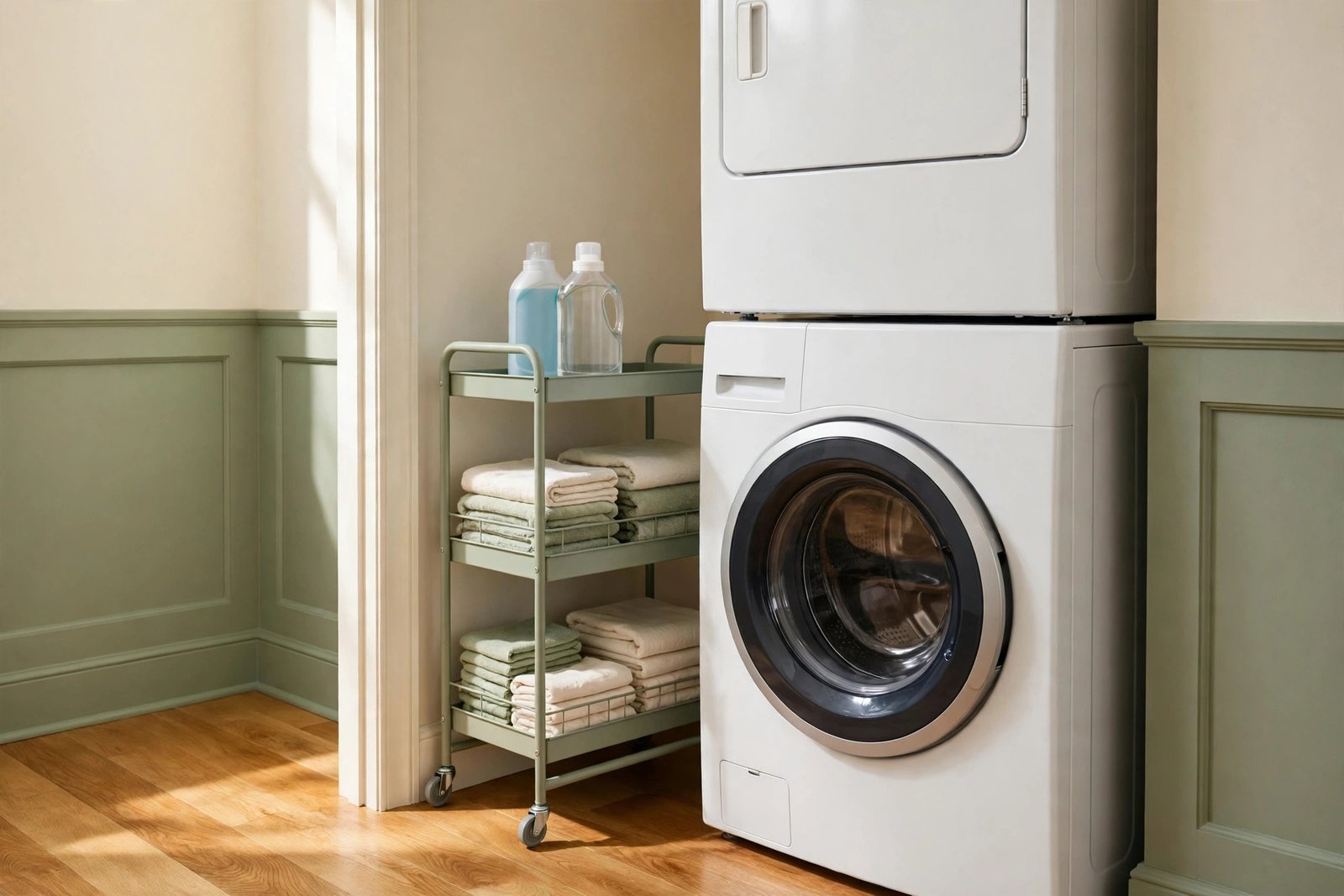
Detergent, stain remover, and dryer sheets should live between waist and shoulder height, where you can grab them with one hand while holding a laundry basket with the other. In many closets, that sweet spot is a slim rolling cart in the side gap or a small shelf beside the machines. A cart only 6 to 8 inches wide can slide into the space between the stack and the wall, hold two or three tiers of supplies, and roll out when you need to reach a hose or valve behind it. Because it moves, it never becomes a permanent obstacle.
The Shelf Above the Dryer
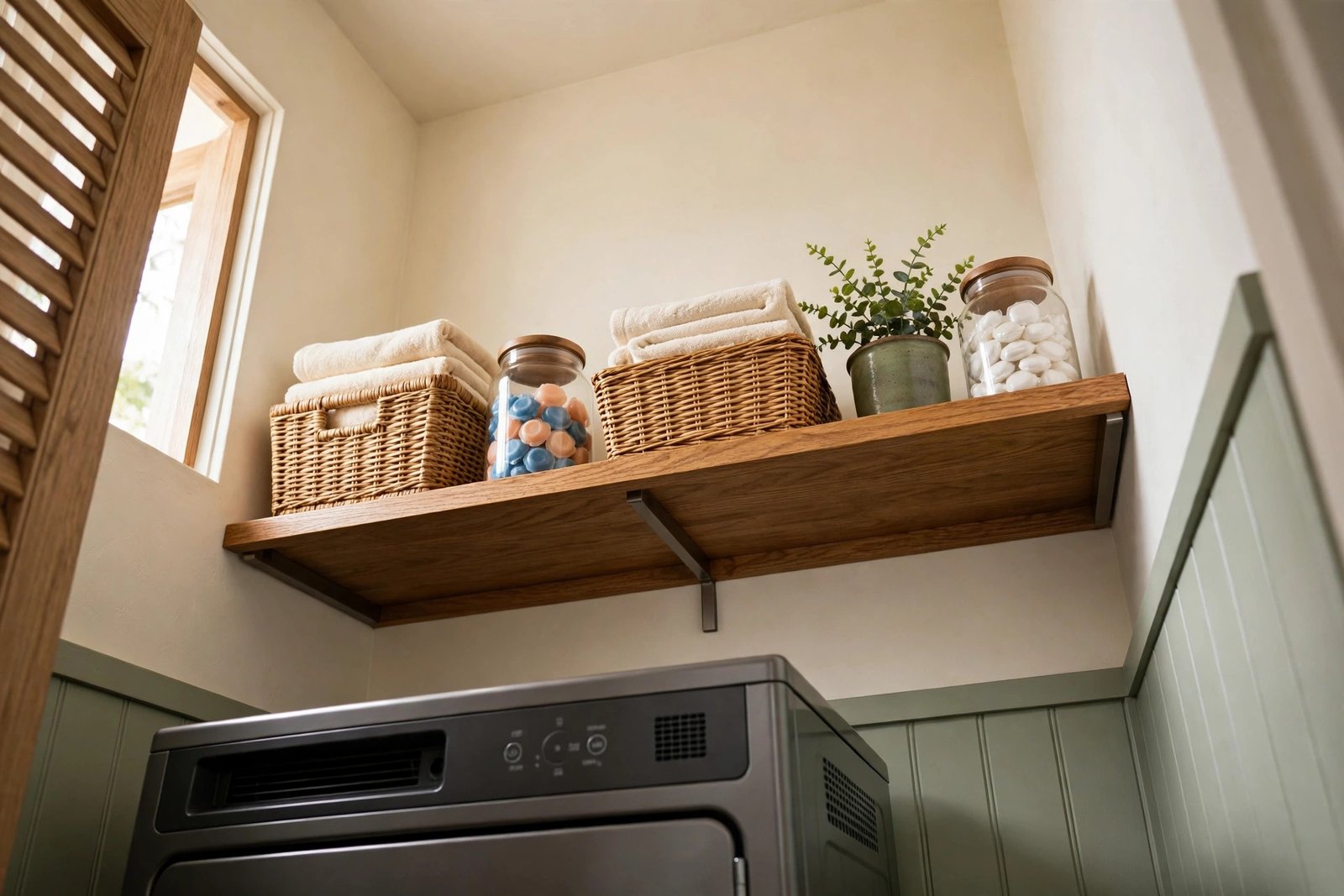
The wall space above a stacked dryer is prime real estate, as long as you keep the required clearance above the machine and do not overload the shelf. A single sturdy shelf works well for weekly and occasional items: extra detergent, a basket of cleaning cloths, spare hangers, or a small sewing kit for loose buttons. Use woven baskets or lidded bins so the shelf reads as one calm row instead of a jumble of bottles. Keep anything heavy or frequently used lower, since reaching overhead with a full detergent bottle is awkward and unsafe.
Sorting, Folding, and the Floor
Laundry needs a landing zone. If your closet has a few inches of floor space in front of the machines, a low, narrow hamper or a two-basket sorting setup keeps dirty clothes off the floor. A fold-down counter or wall-mounted drying rack above or beside the machines gives you a temporary folding surface and a place for delicates, then disappears when you need the room. If floor space is truly zero, a hanging sorter on the inside of the door can separate lights and darks without taking up any footprint at all.
Make the Door Work for You
Closet doors are free storage walls. Over-the-door hooks hold a hanging laundry bag or a robe, a slim door-back rack can store spray bottles and lint rollers, and a few hooks keep a mesh delicates bag and a small trash bin for lint within reach. Just check that door-mounted storage does not collide with the machines when the door closes, and avoid anything heavy enough to strain the hinges.
If your closet has no doors, or the swing of a regular door eats into the room, consider how you conceal the machines. Bifold doors fold back out of the way, a pocket door disappears into the wall, and a simple curtain on a tension rod is a renter-friendly option that still allows airflow. Whichever you choose, remember the dryer’s need for ventilation — a solid, tightly sealed door is the wrong choice for most laundry closets.
Small Upgrades That Make a Big Difference
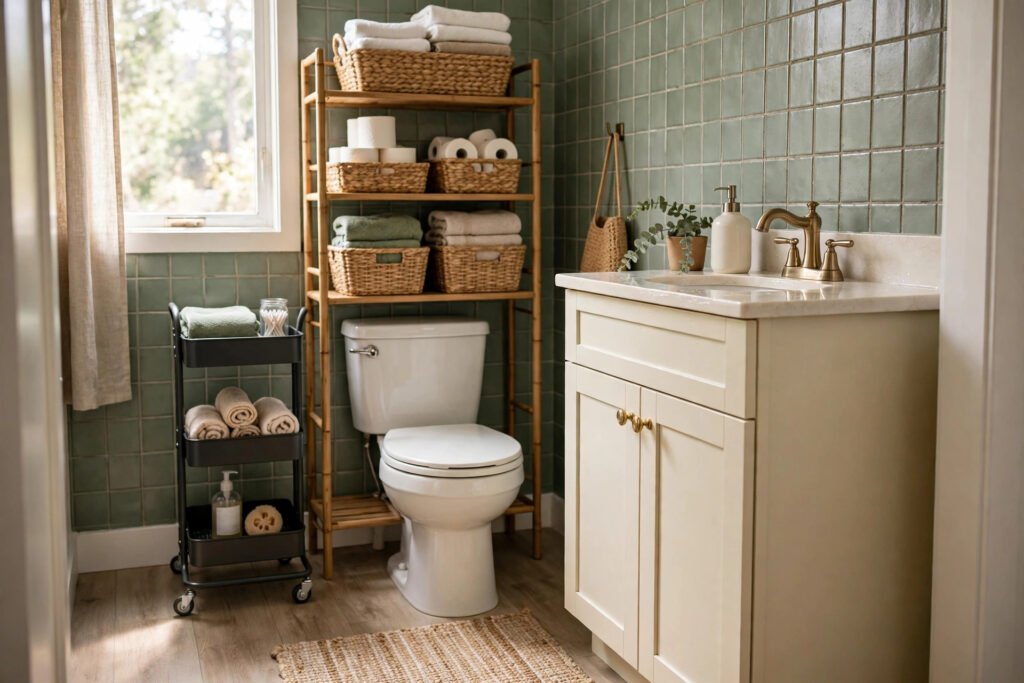
A washable mat in front of the machines catches drips and defines the work zone. Clear, labeled jars look tidy and show when supplies run low — keep pods safely away from children, ideally in their original child-resistant packaging. A small motion-sensor light under the shelf helps in a dim closet. For the same renter-friendly thinking elsewhere, see our guide to small bathroom storage over the toilet without drilling.
For supplies that overflow the closet, borrow a trick from the kitchen: group rarely used items together and store them where the space is genuinely spare. Our under-sink organization guide for small kitchens with rental pipes shows how to work around plumbing without blocking access, and the same principles apply to laundry valves and hoses. If your whole home is short on storage, the complete guide to small kitchen storage for renters with no pantry offers zone-based ideas that translate well to laundry spaces.
Common Mistakes to Avoid
- Blocking the vent or air intake. Baskets and boxes pushed against the dryer can trap heat and lint. Keep vents completely clear.
- Storing heavy bottles overhead. Detergent is heavy and slippery. Keep it at waist-to-shoulder height.
- Sealing the closet with a solid door. Dryers need airflow. Choose a louvered door, leave gaps, or keep the front open.
- Building fixed storage over shutoff valves. You must be able to reach the water shutoffs immediately. Use movable storage nearby instead.
- Forgetting the floor. Check that the floor is level and the machines sit steady; an unlevel stack vibrates, walks, and stresses hoses.
- Overloading the top shelf. A shelf above the dryer should hold light, occasional items — not a warehouse of backstock.
Frequently Asked Questions
How much space does a stacked washer and dryer need?
Most stacked pairs are about 27 inches wide, but plan for roughly 30 inches of width, about 38 inches of depth including hoses and vent space, and 75 to 80 inches of height. Always confirm with your model’s manual, since clearances vary.
Can I put a shelf directly above the dryer?
Usually yes, provided you keep the manufacturer’s required clearance above the machine and the shelf does not block ventilation or service access. Keep the shelf for light, weekly items and store heavy detergent lower.
What is the best storage for the narrow gap beside the machines?
A slim rolling cart about 6 to 8 inches wide is ideal because it uses the gap without becoming permanent. It can hold daily supplies and rolls out whenever you need to reach hoses or valves.
Do laundry closet doors need ventilation?
In most cases, yes. Dryers exhaust warm, moist air, so a louvered door, a door with gaps, or an open front helps air circulate. Check your dryer’s manual for its specific ventilation requirements.
Conclusion
A small laundry closet works best when storage respects the machines first and fills the gaps second. Measure carefully, protect clearances and airflow, keep daily supplies at arm’s reach, use the shelf above the dryer for weekly items, and let movable storage handle the narrow spaces. With those zones in place, even the smallest closet can handle laundry day without clutter — and close up neatly when the last load is folded.