A small kitchen without a pantry fails in predictable places: food spreads across the counter, spices hide behind bottles, and the under-sink cabinet becomes a dark catch-all. The fix is not a bigger kitchen. It is a storage system built around zones, vertical space and containers that match how you actually cook.
This guide is written for renters. Every idea here avoids permanent changes: no new cabinets, no built-in pantry and no drilling unless your lease and landlord clearly allow it. Start with the zones, then add only the organizers that solve a specific problem.
Start With Five Kitchen Zones
Before buying anything, assign every item to one of five zones. Zones stop the slow drift that turns counters into storage.
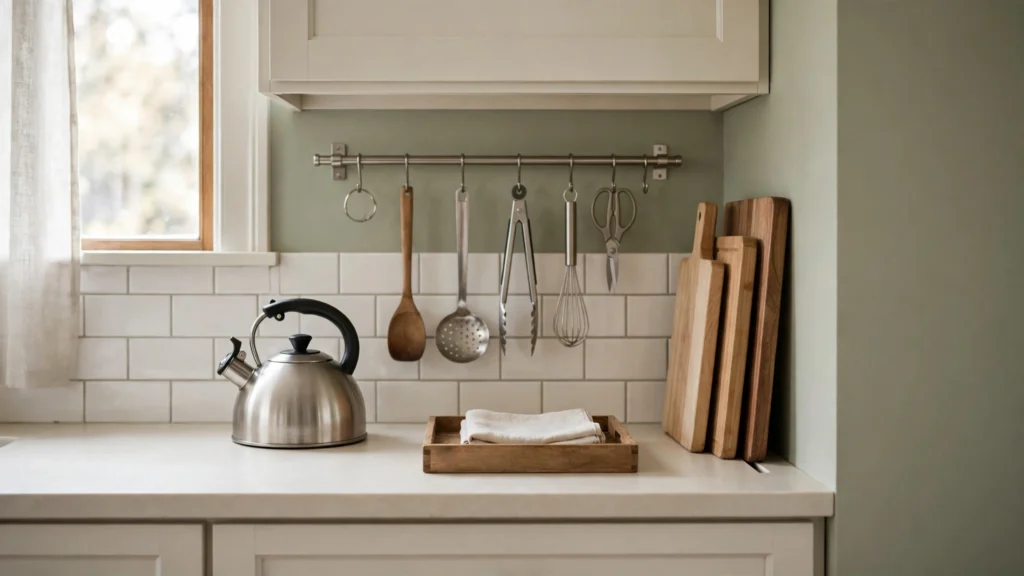
- Cooking zone: oils, salt, pepper, spatulas, tongs and pans near the stove.
- Prep zone: knives, cutting boards, mixing bowls and measuring tools near your clearest counter space.
- Food zone: dry goods, cans, snacks and breakfast items in one cabinet, cart or shelf run.
- Drink zone: mugs, glasses, tea and coffee near the sink or kettle.
- Cleaning zone: dish soap, sponges, trash bags and cleaners under the sink, kept separate from food.
If an item does not belong to the zone where it sits, move it before you organize anything else. For a step-by-step version of this process, read how to organize a small kitchen with no pantry.
Measure Before You Organize
Small kitchens punish guesses. Measure cabinet width, depth and shelf height before choosing bins or risers. In many US rentals, base cabinets are about 24 inches deep and wall cabinets about 12 inches deep, but older buildings vary, so your tape measure matters more than any standard size.
Write down four numbers: the widest cabinet, the narrowest drawer, the height under the sink around the pipes, and the clear counter run you need for prep. Organizers that ignore pipes, hinges and door swing create new problems.
Build a Pantry Without a Pantry
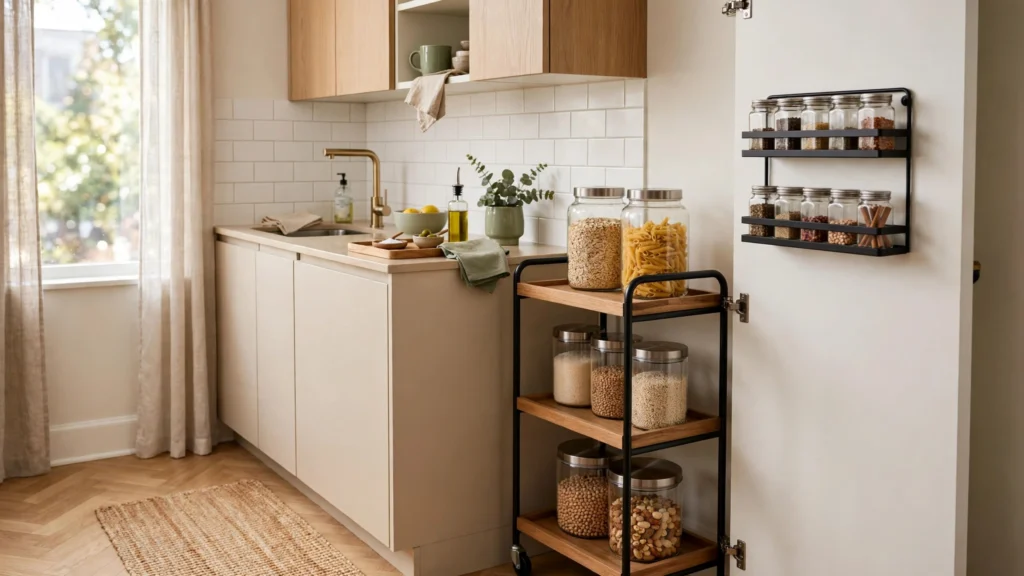
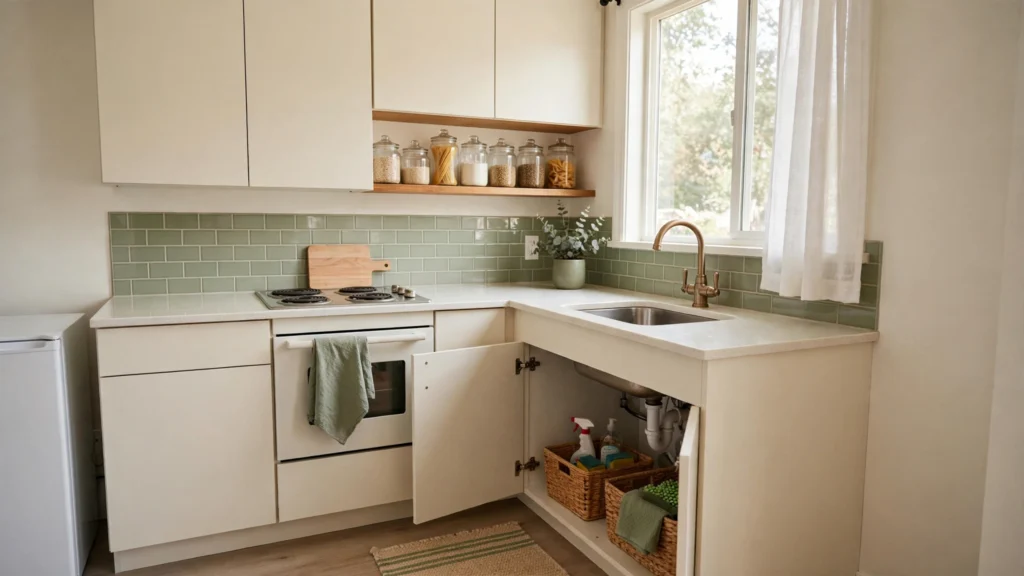
Choose one home for dry food and protect it. Good renter options include a single cabinet with shelf risers, a narrow rolling cart that fits beside the fridge, or one open shelf run with matching airtight containers. The best option is the one you can reach daily without moving three other things.
- Decant only staples you use weekly, such as rice, pasta, oats and flour.
- Label containers with contents and the date you filled them.
- Keep one small “use first” bin for opened packages and near-date items.
- Store heavy items low and light, rarely used items high.
Avoid buying bulk food that your kitchen cannot hold. In a no-pantry kitchen, smaller packages bought more often usually waste less space and less food.
Make Cabinets Work Harder
Cabinets waste space vertically. Shelf risers create a second level for cans and jars. Turntables help corner cabinets and deep shelves because items come to you instead of hiding at the back. Clear bins group small packets so a shelf behaves like a drawer.
Keep everyday dishes at eye level, glasses near the sink, and baking dishes or serving pieces on the highest shelf. If a cabinet needs a step stool for daily items, the layout is wrong.
Keep Counters Clear on Purpose
A clear counter is storage too: it is the workspace that makes cooking possible. Allow only daily-use items to live out, and group them on one tray so the counter can be cleared in seconds. Everything else needs a cabinet, drawer, cart or wall home.
Our counter routine is covered in small kitchen counter organization that stays clear.
Use the Under-Sink Cabinet Safely
Under-sink space is useful, but pipes and possible leaks limit what belongs there. Use low baskets or a tension-rod caddy that fits around plumbing, and keep cleaning products upright and separate from food. Check for moisture before storing paper goods or anything that can be damaged by a slow leak.
Never store food under the sink with chemicals. If you smell mustiness or see water stains, tell your landlord before adding organizers.
Spices, Fridge and Freezer
Spices work best in one shallow drawer, a door rack rated for the weight, or a single turntable. Alphabetical order helps, but grouping by use — everyday, baking, heat — is faster when you cook.
In the fridge, use clear bins for categories: leftovers, produce, drinks and condiments. Label leftovers with dates. In a small freezer, flat bags and upright containers use space better than bulky boxes.
Renter Rules That Protect Your Deposit
- Prefer tension, over-door, freestanding and adhesive solutions rated for the load.
- Test adhesive products in a hidden spot and follow removal instructions.
- Do not overload cabinet doors with racks; hinges are not storage beams.
- Keep walkways and stove clearances open; storage should never crowd burners or exits.
A Simple Weekend Reset
- Empty one zone at a time and discard expired food.
- Group what remains by zone and frequency of use.
- Measure, then add risers, bins or a cart only where a gap remains.
- Label shelves and containers so the system survives busy weeks.
- Photograph the finished zones for your own reference when restocking.
A small kitchen does not need more objects. It needs fewer, better-placed ones. Build the zones first, protect one food home, keep counters ready for work, and the room will feel larger without a single permanent change.
Before you buy
- Measure width, depth and height in centimeters.
- Choose removable, renter-friendly storage first.
- Keep everyday items visible and easy to return.
Continue with the complete small kitchen storage guide or browse Organization ideas.