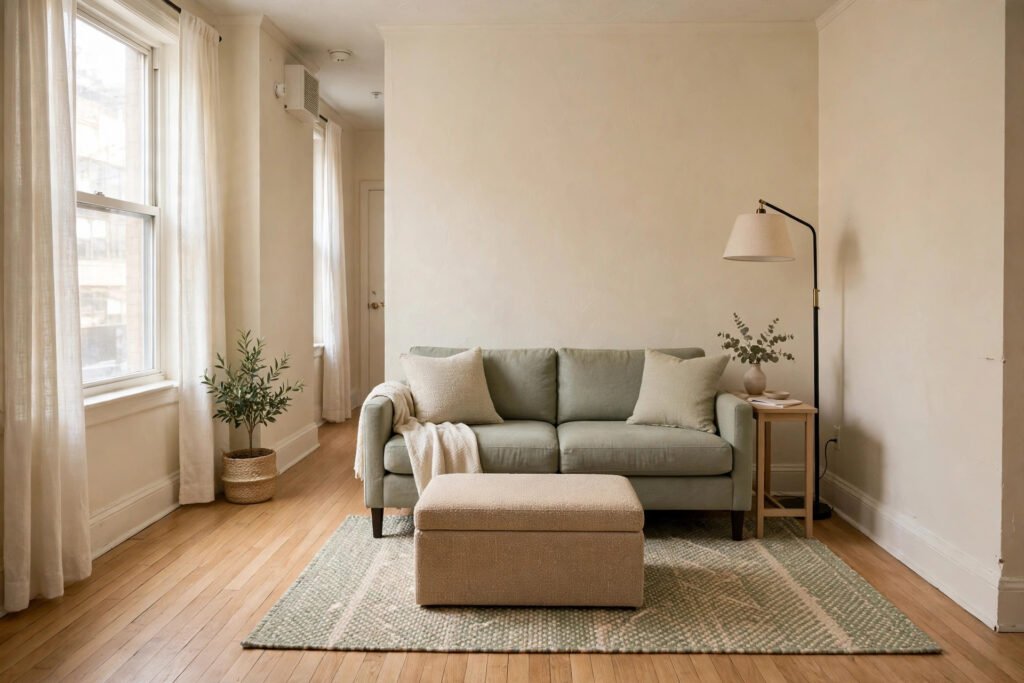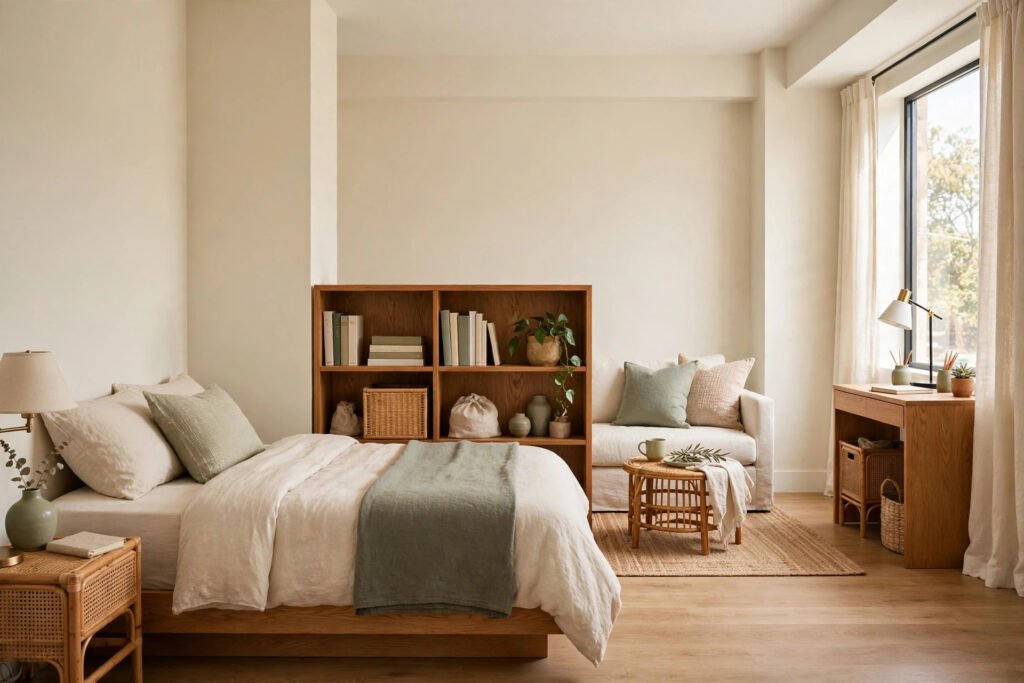
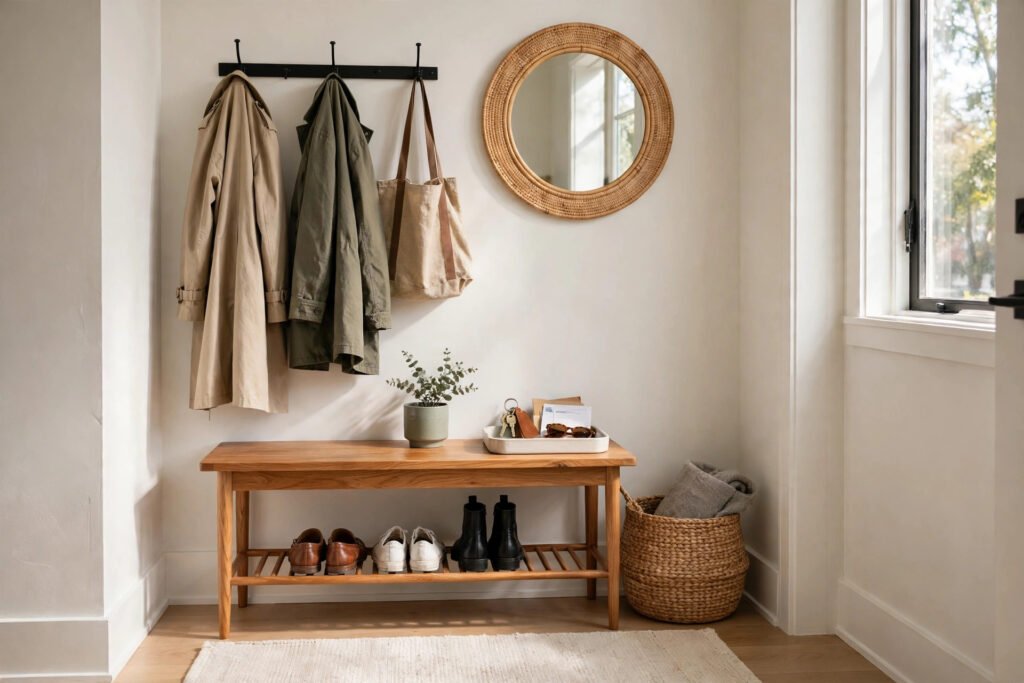
A small apartment entryway with no coat closet can turn into a pile of shoes, bags, and jackets within a week. The fix is not a bigger hall tree or a row of bulky bins. It is a small, clearly defined drop zone that gives everyday items one place to land while keeping the door swing and walking path open. With a few measurements, slim furniture, and hooks placed at the right height, renters can build an entryway that looks calm and works on busy mornings.
Start by measuring the door swing and walking path
Before buying anything, open the front door fully and note where it travels. Mark the swing on the floor with painter’s tape if that helps. Anything placed inside that arc will get bumped, block the door, or force you to squeeze past it. In most small entryways, the safest storage sits on the wall beside the door, on the wall opposite the swing, or in a shallow niche that does not narrow the route into the apartment.
Next, protect the walking path. Aim to keep about 36 inches of clear width where people enter, turn, and set down bags. That number is a practical planning target, not a substitute for local code or lease rules, but it helps prevent the common mistake of choosing furniture that looks fine in a product photo and feels crowded in real life. If your entry opens straight into the living room, the same clear-path thinking also helps with a small living room layout in a narrow apartment, because the entry zone and seating zone need to share the same few feet.
Define a 3-by-4-foot drop zone with a rug
A washable rug or flatweave runner can quietly define the entryway even when there is no hallway. A zone around 3 by 4 feet is large enough for one person to step in, close the door, and put things down, but small enough to keep clutter from spreading across the room. Choose a low-pile rug that will not catch under the door, and leave enough clearance for the door to open without dragging.
Use the rug as a boundary. Shoes stay on or beside it, bags go to the hook or bench inside the zone, and mail goes to one tray instead of the nearest chair. This simple boundary matters in studio and one-bedroom layouts where the entryway is really just the first corner of the living space. If the rug slides, add a rug pad cut to size so the whole setup stays put.
Choose slim furniture that stays out of the way
Depth is the measurement that makes or breaks a no-closet entryway. Look for benches, consoles, and cabinets around 10 to 12 inches deep. That depth can hold shoes, a tray, or a small basket without stealing the walking path. A deeper piece may offer more storage, but it often creates the exact bottleneck renters are trying to avoid.
A narrow shoe bench is especially useful because it gives you a seat for putting on shoes and a contained place for the pairs worn most often. If a bench will not fit, a low shoe rack with a tray underneath can work, as long as it stays inside the drop zone and does not creep into the doorway. For overflow clothing, use the same limits you would use in a bedroom: seasonal coats and rarely worn shoes belong in a closet alternative, not at the front door. Our guide to organizing a small bedroom with no closet can help when the entryway starts absorbing wardrobe overflow.
Put coats on the wall without overloading it
Hooks replace the missing coat closet, but placement matters. For adults, a hook rail around 57 to 60 inches from the floor keeps coats off the ground without making everyday jackets hard to reach. For kids, a lower hook around 38 inches lets them hang a backpack or light jacket themselves. Space hooks far enough apart that coats do not stack into one bulky mound; five to seven inches between hooks is a useful starting point for light jackets, while winter coats may need more room.
Renters should check the lease before drilling. If screws are not allowed, over-door hooks can hold coats and bags without wall damage, but test the door clearance first so the door still closes cleanly. Adhesive hooks are best for light items such as keys, a cap, or a small tote; always check the weight rating and the surface instructions before trusting one with a wet winter coat. If you want a more finished look without nails, pair hooks with the ideas in our guide to renter-friendly wall decor without nails, such as leaning a mirror instead of mounting heavy decor.
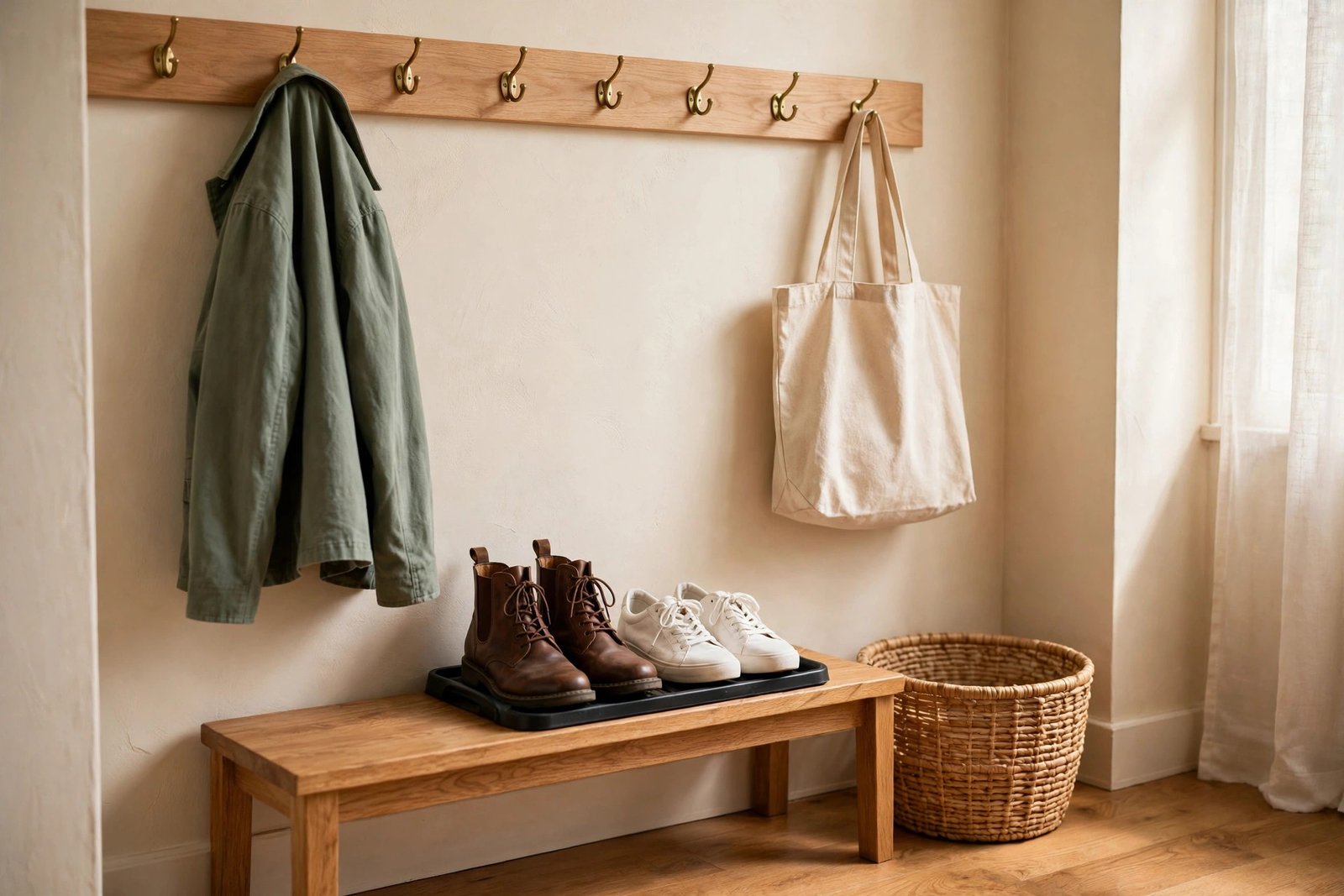
Give shoes a limit and a tray
Shoes are usually the first thing to spread. Set a door-side limit of one to two pairs per person: the pair worn most often and, in wet weather, one backup pair. Everything else goes to the bedroom, under-bed storage, or a closet shelf. A boot tray or washable mat under the shoe bench catches grit and water before it reaches the rug.
Keep the tray small enough that it does not become a second storage zone. If shoes regularly overflow the tray, the problem is the limit, not the tray size. A quick weekly reset helps: return stray pairs, shake out the mat, and move seasonal footwear away from the door. In a small entryway, the goal is not to store every shoe you own; it is to make the next exit easy.
Add a landing spot for keys, mail, and bags
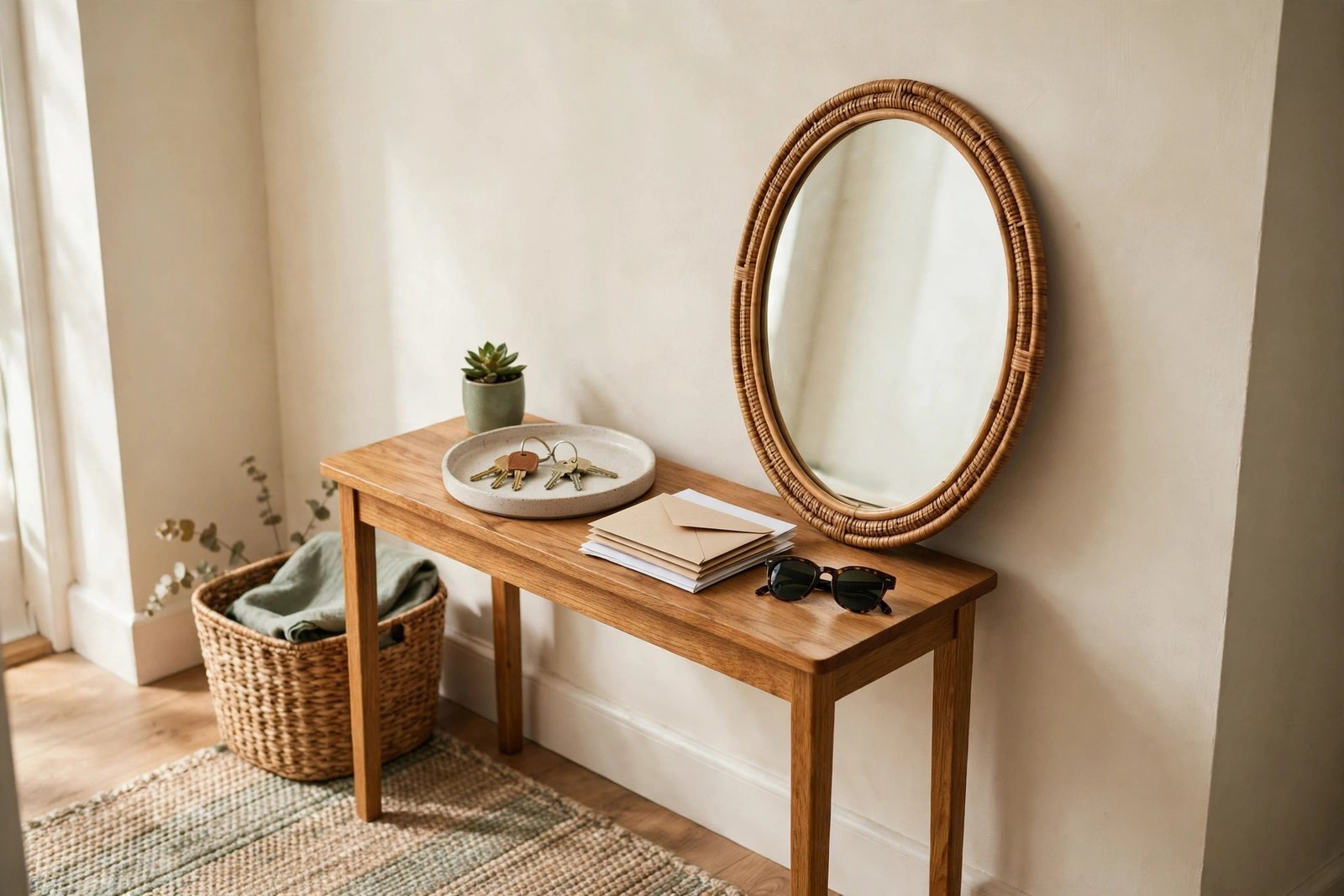
Every drop zone needs one landing surface. A small tray, shallow bowl, or wall-mounted mail holder gives keys, sunglasses, and mail a predictable home. Keep the tray near the hooks so the routine is simple: hang the bag, drop the keys, sort the mail.
A mirror can make the entryway feel brighter and gives you a last check before leaving. Lean a narrow mirror against the wall if drilling is not allowed, or use a lightweight mirror with approved mounting hardware. Keep the mirror inside the drop zone rather than across the walking path, and avoid placing fragile items where the door can hit them.
Make it renter-friendly from the start
Choose pieces that can move with you: a slim bench, a freestanding hook rack, over-door hooks, baskets, and a rug. Avoid permanent changes unless your lease clearly allows them and you are comfortable repairing holes later. If you do use adhesive products, remove them slowly according to the package directions and test in an inconspicuous spot first.
Also think about guests. A drop zone that works for one person can collapse when two visitors arrive with coats and bags. One extra hook and a small basket for guest items can absorb the overflow without turning the entryway into a storage wall.
Common entryway mistakes to avoid
- Blocking the door swing: storage inside the swing arc makes the entry feel smaller and can damage walls or furniture.
- Choosing furniture that is too deep: pieces deeper than about 12 inches often narrow the walking path in small apartments.
- Using adhesive hooks for heavy coats: light-duty hooks fail when overloaded, especially on textured or freshly painted walls.
- Storing every shoe at the door: without a per-person limit, the drop zone becomes a shoe pile.
- Skipping the landing tray: keys and mail spread to counters, chairs, and floors when there is no single landing spot.
Frequently asked questions
How much space do I need for an entryway drop zone?
A 3-by-4-foot rug zone is a practical starting point for many small apartments. Keep about 36 inches of clear walking width where possible, and place storage outside the door swing.
What depth should entryway furniture be in a small apartment?
Look for benches, consoles, and cabinets around 10 to 12 inches deep. Slim pieces hold everyday items without narrowing the entry path.
Can adhesive hooks hold winter coats?
Only if the specific hook, surface, and installation method are rated for that weight. Many adhesive hooks are better for keys, hats, and light bags. For heavy coats, a freestanding rack, over-door hooks, or an approved screw-mounted rail is safer.
How many shoes should stay by the door?
One to two pairs per person is a workable limit for most small entryways. Keep seasonal or rarely worn shoes in bedroom or closet storage so the door area stays clear.
The bottom line
Small apartment entryway organization with no coat closet works best when the zone is measured, shallow, and limited. Define the area with a rug, protect the door swing and walking path, hang coats at reachable heights, cap the shoe count, and give keys and mail one landing spot. The result is not a closet replacement for everything you own; it is a calm, renter-friendly system for the items you use every day.