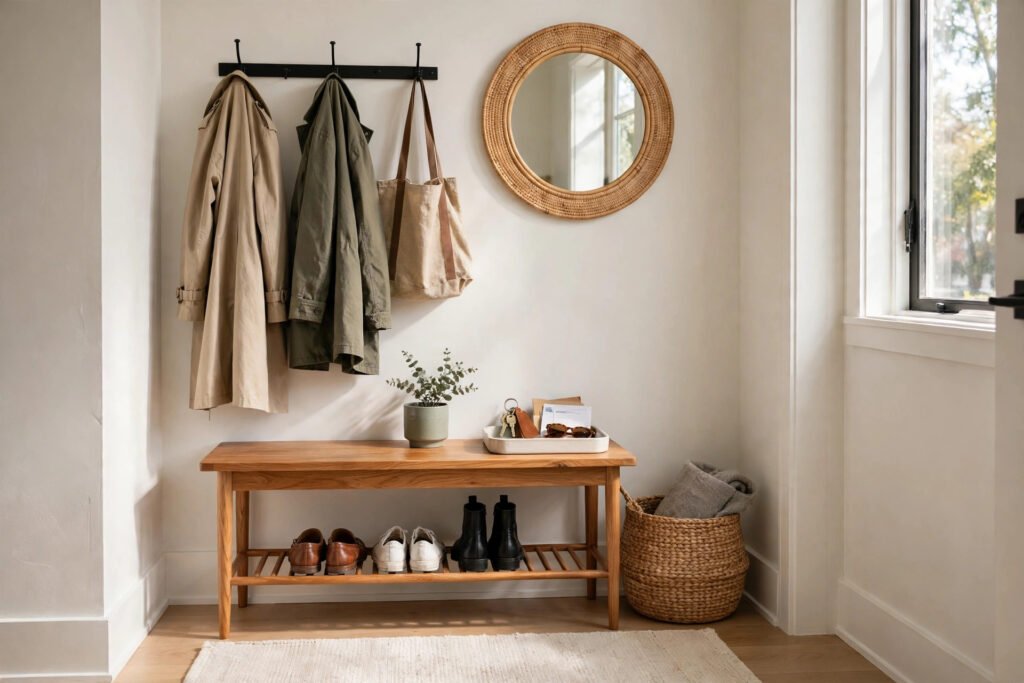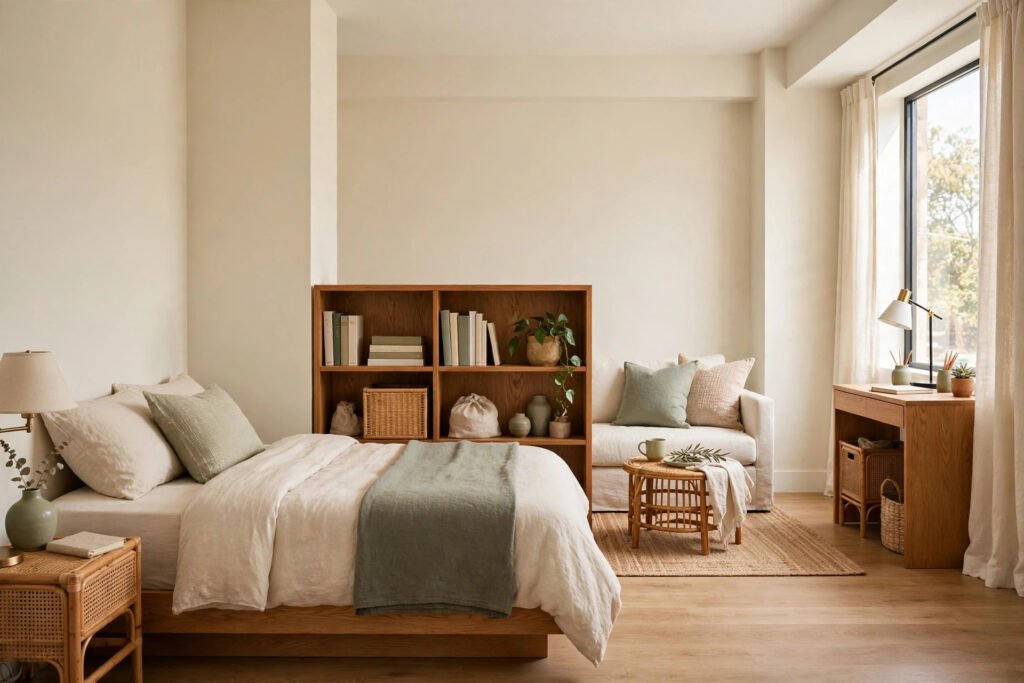
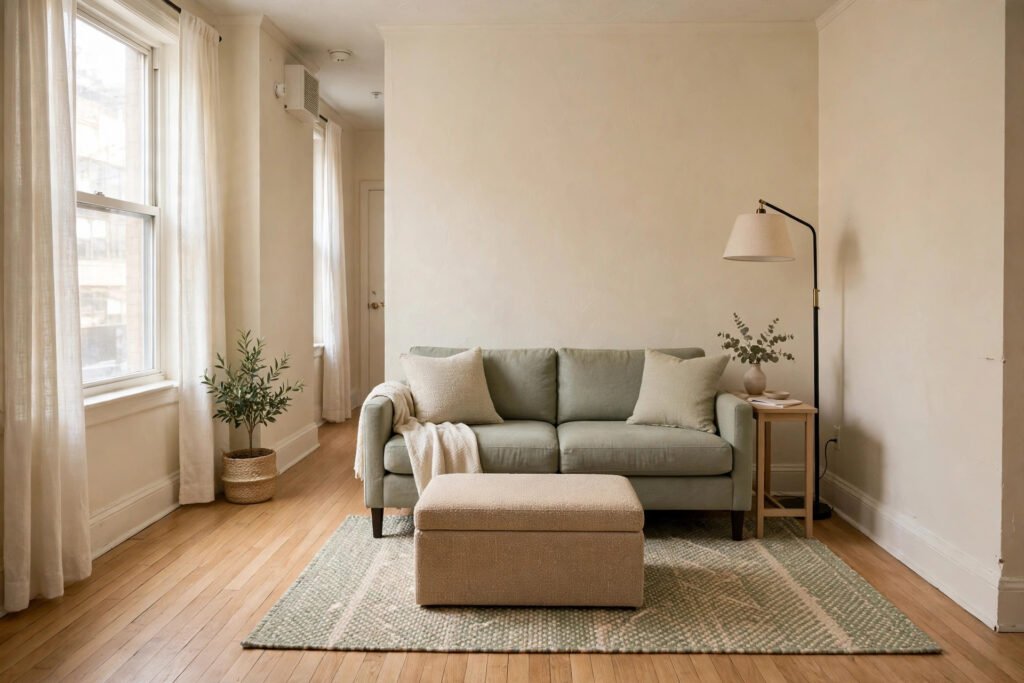
A narrow living room usually feels cramped because the furniture was placed where it fit, not where people need to move. For a small living room layout in a narrow apartment, start with the walkway. Once the path through the room is clear, the sofa, rug, lighting and storage decisions become much easier.
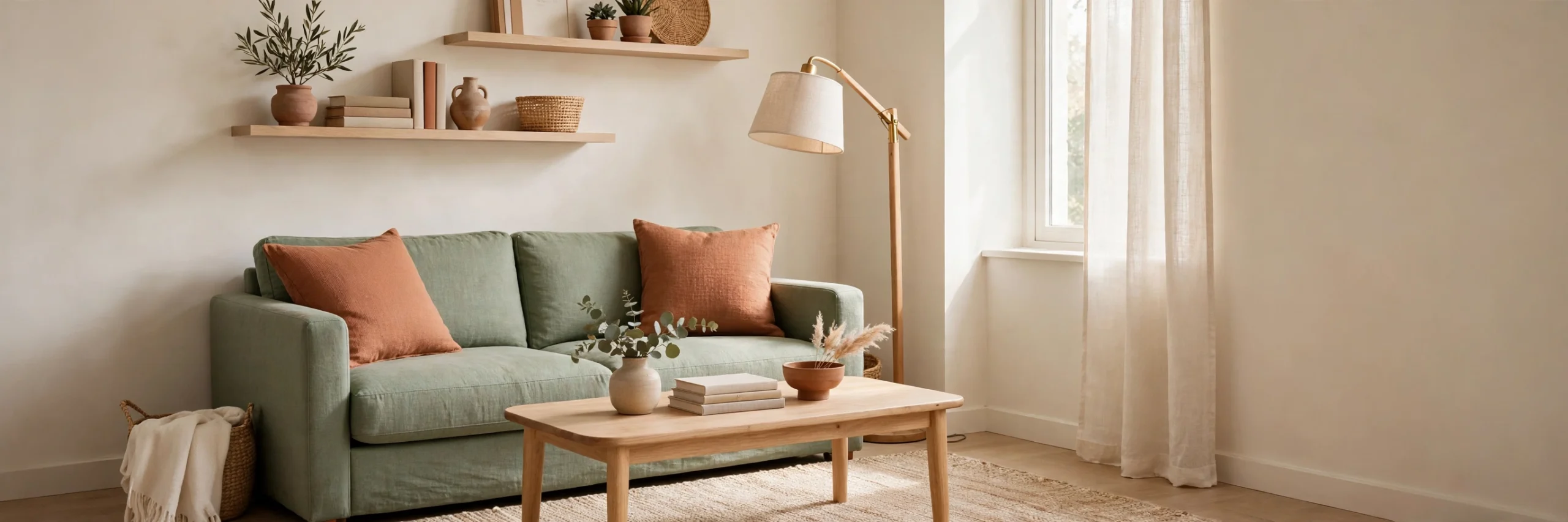
Start With the Walkway, Not the Sofa
Measure the room before moving anything. Mark the entry door swing, windows, radiators, outlets and any hallway opening. Keep the main walking path about 30 to 36 inches wide where possible. A tighter secondary gap can work beside a chair, but the route you use every day should not require turning sideways.
This one rule prevents the most common narrow-room mistake: two large pieces facing each other with a coffee table trapped between them. If the path disappears, the room will feel smaller no matter how light the colors are.
Put the Sofa on the Longest Solid Wall
In most narrow apartments, the safest layout is a wall-sofa plan. Place the sofa or loveseat on the longest uninterrupted wall, keep the rug under the front legs, and leave the opposite side open for movement. Add one chair only if it can sit at an angle or beside the sofa without blocking the door.
Choose a sofa with slim arms and visible legs when you can. Thick rolled arms eat seating width, while raised legs let more floor show and make the piece read lighter. If you already own a larger sofa, pull it a few inches off the wall only when the walkway still stays clear.
Size the Rug to the Seating Zone
A rug that is too small makes the seating area look scattered. In a narrow room, the rug should sit under the front legs of the sofa and main chair, with the coffee table about 14 to 18 inches from the sofa. Leave the main walkway outside the rug when the room is also a pass-through.
Round or oval coffee tables are easier to walk around than sharp rectangles. Nesting tables and storage ottomans also work well because they provide a surface without permanently claiming the center of the room.
Create One Storage Wall
Renters often spread storage across every wall, which makes a narrow room feel busy. Pick one wall or one end of the room for storage: a shallow bookcase, closed cabinet, storage bench or media console. Keep the other walls calmer so the room has visual breathing space.
Closed storage is especially useful for remotes, chargers, blankets and games. If you need more small-space storage ideas, pair this layout with our guide to organizing a small bedroom with no closet so clothing storage does not migrate into the living room.
Use Light at Two Heights
One ceiling light rarely makes a narrow room feel finished. Add a floor lamp near the sofa end and a smaller table lamp or plug-in light near the seating zone. Warm light at two heights creates depth without taking floor space.
A mirror can help when it reflects a window or lamp, but only hang it with a method your lease allows. For nail-free options, see our guide to renter-friendly wall decor without nails.
Three Layouts to Try
1. Wall sofa layout
Best for very narrow rooms. Sofa on the long wall, rug under front legs, one side table, one lamp, and storage contained at one end.
2. Corner anchor layout
Best when doors or windows break up the long wall. Put the sofa on one wall and a chair or ottoman at a right angle, leaving the diagonal path open.
3. Floating sofa layout
Best for open-plan apartments. Float the sofa only enough to define the living zone, and keep a real path behind or beside it. A low console behind the sofa can hold storage without blocking light.
Common Mistakes
- Pushing every piece against the walls and leaving a dead center.
- Using a rug that only fits under the coffee table.
- Blocking the entry path with an armchair.
- Buying a sectional before measuring doorways and turning space.
- Adding decor before the layout works.
FAQ
How much space should I leave for a walkway?
Aim for 30 to 36 inches on the main path. If the room is extremely narrow, protect the most-used route first and reduce furniture depth before squeezing the path.
Should a small living room have a coffee table?
Only if it leaves comfortable leg room. A storage ottoman, nesting tables or a small round table often works better than a large rectangular coffee table.
Can a sectional work in a narrow apartment?
Yes, if it has slim arms, visible legs and a chaise that does not block the door swing. Measure the full footprint, not just the seating width.
For more room-by-room planning, browse ERVRA room ideas and build the layout around movement first.