
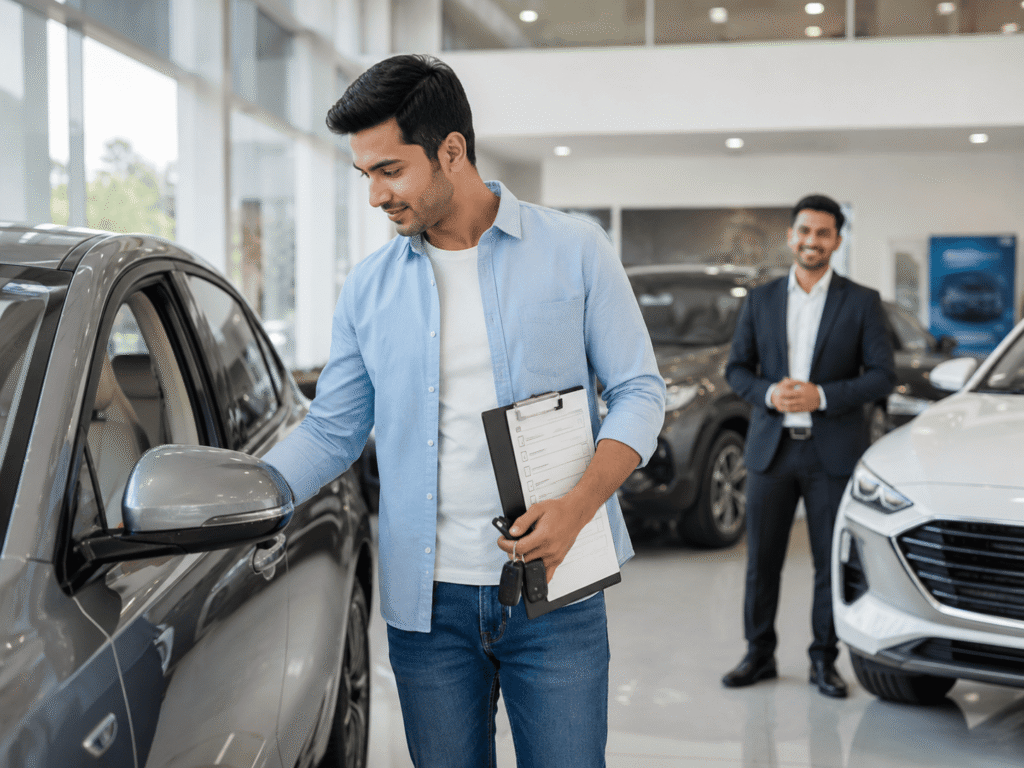
Buying your first car? Learn how to set a budget, choose new or used, inspect the car, take a test drive, check documents, compare insurance, and avoid common mistakes.
How to Buy Your First Car: A Simple Guide for Beginners
Buying your first car is exciting, but it can also feel confusing. There are so many choices, so many prices, so many opinions, and so many things to check before making a decision. Some people will tell you to buy new. Others will say used is better. Some will focus on looks, while others will talk about fuel economy, insurance, resale value, or maintenance cost.
The truth is simple: your first car should match your budget, your daily use, and your comfort level. It does not need to be the fastest car, the most expensive car, or the most stylish car. It needs to be reliable, safe, affordable to run, and easy to maintain.
A first car is not only a purchase. It is a responsibility. You will pay for fuel or charging, insurance, maintenance, tyres, registration, repairs, and sometimes parking. That is why choosing carefully matters.
This beginner guide explains how to buy your first car step by step, without confusing technical language.
1. Decide Your Real Budget First
Before you start looking at cars, decide your real budget. This is the most important step. Many first-time buyers make the mistake of looking at cars first and thinking about money later. That often leads to overspending.
Your budget should include more than the car price. You also need to think about insurance, registration, taxes, fuel, maintenance, tyres, parking, loan payments, and emergency repairs. A car that looks affordable on the buying day may become expensive if running costs are high.
A smart first-car budget should include:
-
Purchase price
-
Insurance cost
-
Registration and taxes
-
Fuel or charging cost
-
Basic maintenance
-
Tyres
-
Emergency repair fund
-
Loan payment if financing
-
Parking or tolls if needed
If you are buying a used car, keep some money aside after the purchase. Even a good used car may need oil, filters, tyres, brakes, or minor repairs soon after buying.
A good rule is this: do not spend every rupee, dollar, pound, or euro on the purchase price. Keep a safety amount for ownership costs.
2. Understand What You Need From the Car
Your first car should fit your real life. Do not buy a car only because it looks cool or because someone else likes it. Think about how you will actually use it.
Ask yourself:
-
Will I drive mostly in the city?
-
Will I travel on highways?
-
Do I need space for family?
-
Will I carry luggage or tools?
-
Do I need automatic or manual?
-
Is fuel economy important?
-
Do I have easy access to service centers?
-
Will I keep the car for many years?
-
Is resale value important?
If you drive mostly in the city, a small hatchback or compact car may be enough. If you travel with family, a sedan or small SUV may be better. If you drive long distances, comfort and fuel economy matter more. If you are considering an electric car, charging access becomes very important.
The best first car is not the same for everyone. It depends on your daily routine.
3. New Car or Used Car: Which Is Better?
This is one of the biggest questions for first-time buyers.
A new car gives you peace of mind. It comes with warranty, clean history, latest features, and less risk of hidden problems. You do not need to worry about previous accidents, poor maintenance, or unknown repairs. The downside is that new cars usually cost more and lose value faster in the first few years.
A used car is cheaper to buy, and you may get a bigger or better model for the same money. But used cars need more careful checking. You must inspect condition, service history, accident history, documents, tyres, brakes, engine, transmission, and mileage.
For beginners, a reliable used car can be a smart choice if it is inspected properly. A new car is better if your budget allows it and you want less risk.
Choose a new car if you want warranty and peace of mind.
Choose a used car if you want lower price and better value, but only after proper inspection.
4. Research Cars Before Visiting Sellers
Do not visit a dealership or seller without research. First-time buyers can easily feel pressured if they do not know market prices or common problems.
Before visiting, compare different models online. Read owner reviews, reliability ratings, fuel economy figures, maintenance costs, spare parts availability, and resale value. Watch video reviews if needed, but do not rely only on one source.
Make a short list of three to five cars that fit your budget and needs. This keeps you focused and prevents emotional buying.
For each car, check:
-
Average market price
-
Common problems
-
Fuel economy
-
Maintenance cost
-
Insurance cost
-
Parts availability
-
Resale value
-
Safety features
-
Owner reviews
The more you know before visiting, the better decision you will make.
5. Check Total Ownership Cost
The cheapest car to buy is not always the cheapest car to own. Some cars have low purchase prices but expensive parts, poor fuel economy, high insurance, or weak resale value.
Total ownership cost means how much the car will cost you over time. This includes fuel, service, repairs, tyres, insurance, registration, depreciation, and loan interest.
For a first car, you should choose something affordable to maintain. Avoid cars that are known for expensive repairs unless you have the budget for them.
A simple, reliable car is usually better than a flashy car that drains your wallet every month.
6. Check Insurance Before Buying
Many first-time buyers forget insurance until the last moment. That can be a mistake. Insurance cost can vary a lot depending on car model, engine size, value, safety features, your age, driving history, and location.
Before finalizing a car, get insurance quotes. A car that looks affordable may have high insurance costs, especially if it is sporty, expensive to repair, or commonly stolen.
For beginners, smaller and safer cars usually cost less to insure. Cars with good safety features may also help.
Do not buy the car first and then discover that insurance is too expensive.
7. Inspect the Car Carefully
If you are buying a used car, inspection is extremely important. Never judge only by shiny paint or clean seats. A car can look good outside and still have serious mechanical problems.
Check the exterior for dents, scratches, rust, uneven paint, panel gaps, and signs of accident repair. Check tyres for wear. Look under the car for leaks. Open the hood and check for oil leaks, coolant leaks, damaged wires, or strange smells.
Inside the car, check seats, dashboard, AC, infotainment, windows, locks, lights, horn, wipers, mirrors, and seat belts. Make sure everything works.
Start the engine and listen carefully. It should start smoothly. Watch for smoke, rough idle, warning lights, or unusual noises.
If you do not understand cars well, take a trusted mechanic with you. Paying for inspection before buying can save you from expensive repairs later.
8. Check the Documents
Documents are just as important as the car’s condition. A car with unclear paperwork can create serious problems later.
Before buying, check:
-
Registration documents
-
Seller’s ID and ownership proof
-
Service history
-
Tax records if required
-
Insurance status
-
Loan or finance clearance
-
Accident history if available
-
Import documents if applicable
-
VIN/chassis number
-
Engine number
-
Transfer process
Make sure the numbers on the documents match the car. If anything looks suspicious, do not rush. A good car with bad paperwork is not worth the risk.
9. Take a Test Drive
Never buy a car without a test drive. A test drive tells you things that photos and descriptions cannot.
During the test drive, check how the car starts, accelerates, brakes, turns, shifts gears, and handles bumps. Listen for strange noises. Check if the steering pulls to one side. Test the brakes gently and then more firmly in a safe area.
Also check comfort. Are the seats comfortable? Is visibility good? Are the controls easy to use? Do you feel confident driving it?
A car may look perfect on paper but feel uncomfortable on the road. Your first car should make you feel safe and confident.
10. Do Not Ignore Warning Lights
When you start the car, warning lights usually appear for a moment and then disappear. But if a warning light stays on, you should take it seriously.
Common warning lights include:
-
Check engine light
-
ABS warning
-
Airbag warning
-
Oil pressure warning
-
Battery warning
-
Temperature warning
-
Brake warning
-
Tyre pressure warning
A seller may say, “It is nothing,” but do not accept that without checking. Warning lights can mean small issues or expensive problems. Get the car scanned or inspected before buying.
11. Avoid Emotional Buying
Buying your first car can be emotional. You may see a car you like and want to buy it immediately. Sellers may also create pressure by saying someone else is interested or the price will increase.
Do not rush. A rushed decision can become an expensive mistake.
Take your time. Compare options. Sleep on the decision if needed. If something feels wrong, walk away. There will always be another car.
A smart buyer chooses with both heart and mind. Liking the car is important, but reliability and affordability matter more.
12. Negotiate the Price
Many first-time buyers feel shy about negotiation, but it is a normal part of buying a car, especially used cars.
Before negotiating, know the market price. If the car has worn tyres, weak battery, scratches, missing service history, or upcoming maintenance, use that information politely to discuss the price.
Do not be rude, but do not be afraid to ask for a fair deal. If the seller refuses and the price feels too high, walk away.
Also remember that the lowest price is not always the best deal. A slightly more expensive car with better condition and clean documents may be smarter than a cheap car with hidden problems.
13. Understand Financing Before Signing
If you are taking a car loan, understand the full cost before signing anything. Do not focus only on the monthly payment. A low monthly payment can sometimes mean a longer loan and more interest.
Check:
-
Down payment
-
Interest rate
-
Loan length
-
Monthly payment
-
Total interest
-
Processing fees
-
Early payment rules
-
Insurance requirements
-
Late payment penalties
Only take a loan if the monthly payment fits comfortably into your budget. Your first car should not create financial stress.
14. Check Fuel Economy or Charging Needs
For petrol, diesel, or hybrid cars, fuel economy matters. A car with poor fuel average can become expensive if you drive daily.
For electric cars, charging access matters even more. Before buying an EV, ask:
-
Can I charge at home?
-
Are public chargers nearby?
-
How long does charging take?
-
What is the real-world range?
-
Is the charging connector common in my area?
-
What will monthly charging cost?
If charging is easy, an EV can be a great first car. If charging is difficult, a petrol or hybrid car may be simpler.
15. Think About Resale Value
Your first car may not be your forever car. Many people sell their first car after a few years and upgrade. That is why resale value matters.
Cars with good reliability, low running cost, strong brand reputation, and easy parts availability usually sell better. Uncommon models, expensive-to-maintain cars, or cars with poor reliability may be harder to sell.
Before buying, check how well the model holds value in your market.
16. Best Type of Car for First-Time Buyers
For most first-time buyers, the best car is usually simple, reliable, fuel-efficient, easy to park, easy to insure, and affordable to maintain.
Good first-car choices usually include:
-
Small hatchbacks
-
Compact sedans
-
Small SUVs
-
Reliable used cars
-
Basic automatic cars
-
Fuel-efficient petrol or hybrid cars
-
Affordable EVs if charging is easy
Avoid buying a car that is too powerful, too expensive to repair, too large for your needs, or too old without inspection.
17. Common Mistakes First-Time Buyers Make
Many first-time buyers make the same mistakes. Avoiding them can save you money and stress.
Common mistakes include:
-
Spending the entire budget on the car
-
Forgetting insurance and registration costs
-
Not checking documents
-
Skipping the test drive
-
Not taking a mechanic for used car inspection
-
Buying only because of looks
-
Ignoring warning lights
-
Not comparing market prices
-
Taking a loan without understanding interest
-
Buying a car with poor parts availability
-
Not checking resale value
-
Trusting the seller too quickly
The more careful you are before buying, the happier you will be after buying.
Final Checklist Before You Buy
Before you say yes, confirm these points:
-
The car fits your budget
-
Insurance is affordable
-
Documents are clear
-
Test drive feels good
-
No serious warning lights
-
Mechanic inspection is done if used
-
Tyres and brakes are acceptable
-
Service history is available if possible
-
Price matches market value
-
Ownership transfer process is clear
-
You still have money left for maintenance
If all of these are clear, you can buy with more confidence.
Final Verdict
Buying your first car should be exciting, not stressful. The key is to stay practical. Do not buy only because of looks, speed, or pressure from a seller. Buy a car that fits your budget, your driving needs, and your long-term comfort.
For beginners, the best first car is usually reliable, easy to maintain, safe, fuel-efficient, and affordable to insure. A simple car in good condition is often better than a flashy car with hidden problems.
Take your time, research properly, inspect carefully, test drive the car, check documents, and understand the full cost before buying.
Your first car should give you freedom, not financial stress.
5) FAQ Section
Q1: What is the best first car to buy?
The best first car is usually reliable, affordable, fuel-efficient, easy to maintain, easy to insure, and comfortable for daily driving.
Q2: Should my first car be new or used?
A new car is better for warranty and peace of mind. A used car is better for lower price and value, but it must be inspected properly before buying.
Q3: What should I check before buying a used car?
Check documents, accident history, service history, engine condition, tyres, brakes, suspension, AC, warning lights, mileage, and take a test drive.
Q4: Should I take a mechanic when buying my first car?
Yes, if you are buying a used car and do not understand mechanical inspection, taking a trusted mechanic is a smart decision.
Q5: What is the biggest mistake first-time car buyers make?
The biggest mistake is spending the full budget on the car and forgetting insurance, registration, maintenance, tyres, and repair costs.