
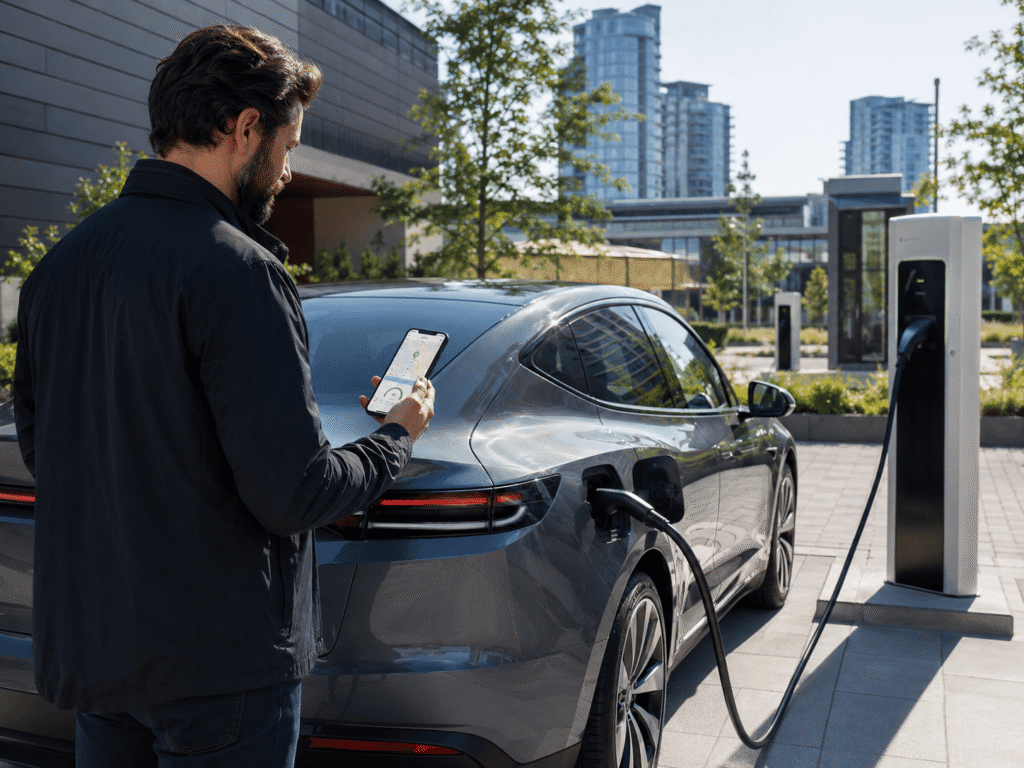
Looking for the best EV charging apps in 2026? Compare PlugShare, ABRP, ChargePoint, Tesla app, Electrify America, EVgo, and Google Maps for easier EV charging.
Best EV Charging Apps in 2026
Owning an electric car becomes much easier when you have the right charging app on your phone. A good EV charging app can help you find nearby chargers, check connector types, compare charging speeds, plan road trips, read user reviews, avoid broken chargers, and sometimes even start and pay for a charging session.
That matters because EV ownership is not only about battery range. It is also about knowing where to charge and how reliable that charger is. A car with good range can still feel stressful if you reach a station and the charger is busy, broken, slow, or not compatible with your vehicle.
In 2026, EV charging apps are more useful than ever. Some apps are best for finding chargers. Some are better for planning long trips. Some are useful because they connect directly to a charging network. And some apps are built into a car brand’s own ecosystem, making charging easier for that brand’s drivers.
The best approach is not to use only one app. Most EV drivers get the best experience by using two or three apps together. For example, you might use PlugShare to check charger reviews, ABRP to plan a long route, and ChargePoint or a network app to start and pay for a charging session.
Here are the best EV charging apps in 2026 and what each one is best for.
Why EV Charging Apps Matter
EV charging apps matter because public charging is not always as simple as using a petrol station. With petrol, you usually stop, fill the tank, pay, and leave. With electric charging, you need to think about charger speed, connector type, station availability, payment method, parking rules, charging network, and whether the charger is actually working.
A good app saves time and reduces stress. It can show you which chargers are nearby, whether they are fast or slow, whether other drivers recently used them, and whether the station has useful reviews or photos.
For beginners, this is especially important. Many new EV owners worry about range and charging. Once they learn how to use charging apps properly, EV ownership feels much easier.
1. PlugShare
PlugShare is one of the most useful EV charging apps for almost every electric car driver. Its biggest strength is the charging map and community information. Drivers can check station locations, read reviews, see photos, and learn from other EV owners before they arrive.
This is useful because official charging network apps do not always tell the full story. A charger may appear available in one app, but real users may mention that it is blocked, slow, hard to find, or unreliable. PlugShare helps fill that gap.
PlugShare is especially good for checking whether a charger is worth visiting. If a station has recent positive reviews, clear photos, and successful check-ins, it feels safer to use. If the reviews are old or negative, you may want a backup option.
Best for: finding chargers, reading reviews, checking station reliability, and planning backup charging stops.
2. A Better Routeplanner — ABRP
A Better Routeplanner, usually called ABRP, is one of the best apps for EV road trips. While PlugShare is great for checking charger locations, ABRP is better for planning the whole journey.
You can enter your vehicle model, destination, starting battery level, and driving preferences. ABRP then helps plan charging stops along the route. It can estimate how much battery you will have when you reach each charger and how long you may need to charge.
This is very helpful for long trips because road-trip charging is different from daily charging. You do not want to stop too often, but you also do not want to arrive at a charger with too little battery. ABRP helps balance the route.
For beginners, ABRP may look a little detailed at first, but once you understand it, it becomes one of the most powerful EV tools.
Best for: road trips, route planning, charging stop planning, and range estimates.
3. ChargePoint
ChargePoint is one of the most useful charging network apps, especially in markets where ChargePoint has strong coverage. The ChargePoint app helps drivers find chargers, filter by speed and connector type, start charging, and pay through the app.
The main advantage of ChargePoint is that it is not only a map. It is also connected to charging sessions. That means you can often use the app to start, monitor, and pay for charging.
ChargePoint is useful for daily EV drivers because many stations are found at workplaces, parking areas, shopping centers, hotels, and public locations. If ChargePoint is common in your area, keeping the app installed makes sense.
Best for: starting charging sessions, paying for charging, checking station filters, and daily public charging.
4. Tesla App
For Tesla owners, the Tesla app is one of the most important tools. It connects directly with the car and helps with charging, battery status, climate control, route planning, and Supercharger use.
Tesla’s biggest advantage is the integrated charging experience. The car and app work together smoothly, and the Supercharger network is often easier to use than many public charging networks. In many cases, Tesla drivers can simply plug in and charge without dealing with complicated app steps.
The Tesla app is also becoming more relevant for some non-Tesla EV owners in regions where Tesla Superchargers are open to other brands. Availability depends on the country, charger type, adapter support, and vehicle compatibility.
Best for: Tesla owners, Supercharger users, and drivers who want a smooth charging experience.
5. Electrify America
Electrify America is an important app for EV drivers in the United States. It helps users find fast chargers, check station status, start charging, and manage payment.
This app is especially useful for road trips because Electrify America focuses heavily on DC fast charging. If your EV supports fast charging and you travel on highways, the Electrify America app can be an important part of your charging setup.
Like any charging network, reliability can vary by location. That is why many drivers use Electrify America together with PlugShare. The network app may show station status, while PlugShare can show recent driver experiences.
Best for: U.S. fast charging, highway trips, DC fast charging, and network-based payment.
6. EVgo
EVgo is another important EV charging app in the United States. It focuses on public fast charging and is useful for drivers who live or travel near EVgo stations.
The EVgo app can help find nearby chargers, check availability, start sessions, and manage payment. It is especially useful in urban areas where drivers may not have home charging and need access to public fast chargers.
EVgo can be a strong option for people who drive in cities, use public charging often, or want another fast-charging network as a backup.
Best for: city fast charging, public charging, backup charging, and U.S. EV drivers.
7. Google Maps
Google Maps is not a dedicated EV charging app in the same way as PlugShare or ChargePoint, but it is still useful. Many drivers already use Google Maps for navigation, and it can show EV charging stations along a route or near a location.
The biggest advantage of Google Maps is convenience. You probably already have it installed, and it is easy to use. It can help you find nearby chargers quickly, check directions, and see surrounding businesses.
However, Google Maps may not always give the most detailed EV-specific information. It may not be as strong for charger reliability reviews, detailed connector filters, or advanced route planning as dedicated apps.
Best for: quick charger searches, simple navigation, nearby station discovery, and backup use.
8. Apple Maps
Apple Maps has also become more useful for EV drivers, especially for iPhone users. In supported vehicles and regions, it can help with EV routing and charging stops. Like Google Maps, it is convenient because many users already rely on it for daily navigation.
Apple Maps is best when it works well with your car and region. It may not replace PlugShare or ABRP for serious EV planning, but it can be a helpful everyday navigation tool.
Best for: iPhone users, simple EV navigation, supported EV routing, and daily travel.
9. Chargemap
Chargemap is popular in many European markets. It helps drivers find charging stations, check details, and use charging services across supported networks.
For EV drivers in Europe, Chargemap can be especially useful because charging access often depends on roaming agreements, cards, and network compatibility. A good app that helps reduce confusion can make a big difference.
If you drive in Europe or plan an EV road trip across different countries, Chargemap is worth considering.
Best for: European EV drivers, cross-border trips, charging station discovery, and network access.
10. Your Car Brand’s Own App
Many EV owners forget that their car brand’s own app can be one of the most useful charging tools. Tesla, Ford, Hyundai, Kia, BMW, Mercedes-Benz, Nissan, Volkswagen, Rivian, and other brands offer apps that can show battery status, charging progress, climate controls, and sometimes charger navigation.
Brand apps are useful because they connect directly to your vehicle. They can show whether the car is charging, how long charging will take, and sometimes let you schedule charging for cheaper electricity rates.
The downside is that brand apps are not always the best for finding every public charger. That is why it is smart to use your car’s app together with a public charging map app.
Best for: battery monitoring, remote controls, charging status, scheduled charging, and vehicle-specific features.
Best App Combination for Beginners
If you are new to EVs, do not worry about installing every app at once. Start with a simple setup.
A good beginner combination is:
-
PlugShare for charger reviews and station checks
-
ABRP for road-trip planning
-
Your main charging network app for payment
-
Your car brand’s app for battery and charging status
-
Google Maps or Apple Maps for daily navigation
This combination covers most real-world needs. You can find chargers, check if they are reliable, plan longer trips, start charging, and monitor your car.
Which EV Charging App Is Best Overall?
The best overall app depends on what you need.
If you want to find chargers and read real user reviews, PlugShare is one of the best.
If you want to plan long EV road trips, ABRP is one of the best.
If you use ChargePoint stations often, the ChargePoint app is essential.
If you drive a Tesla, the Tesla app is a must-have.
If you drive in the United States and use fast chargers, Electrify America and EVgo can be important.
If you drive in Europe, Chargemap can be very useful.
For most EV owners, the best answer is not one app. It is a small group of apps that work together.
Final Verdict
The best EV charging apps in 2026 make electric car ownership easier, especially for beginners. PlugShare helps you check real-world charger reliability. ABRP helps you plan road trips. ChargePoint and other network apps help you start and pay for charging. Tesla’s app gives Tesla owners a smooth charging experience. Google Maps and Apple Maps are useful for quick navigation and backup searches.
If you are new to electric cars, start simple. Install PlugShare, ABRP, your car brand’s app, and the charging network app most common in your area. That setup will solve most charging problems before they happen.
A good EV charging app does more than show dots on a map. It gives you confidence. And for many new EV drivers, that confidence is what makes electric car ownership feel easy.
6) FAQ Section
Q1: What is the best EV charging app in 2026?
PlugShare is one of the best overall apps for finding chargers and checking user reviews, while ABRP is one of the best for EV road-trip planning.
Q2: Which app is best for EV road trips?
ABRP is one of the best EV road-trip planning apps because it helps plan charging stops based on your vehicle and route.
Q3: Which app is best for finding reliable chargers?
PlugShare is very useful because drivers add reviews and photos, which helps you check whether a charger is reliable before arriving.
Q4: Do I need more than one EV charging app?
Yes. Most EV drivers should keep at least two or three apps: one for charger reviews, one for route planning, and one for payment on their main charging network.
Q5: Is Google Maps enough for EV charging?
Google Maps is useful for quick searches and navigation, but dedicated apps like PlugShare and ABRP usually give better EV-specific planning and charger information.