
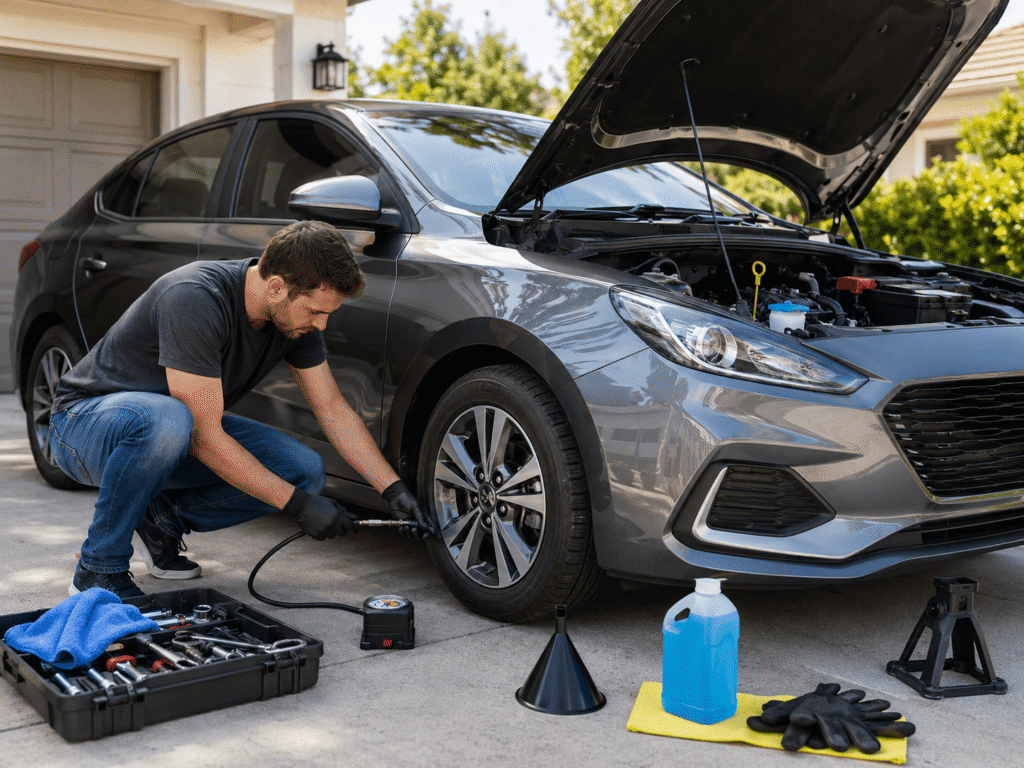
Follow this basic car maintenance checklist to keep your car safe, reliable, and smooth. Learn what to check weekly, monthly, and before long drives.
Basic Car Maintenance Checklist: Simple Guide for Every Driver
Owning a car is not only about driving it. A car also needs small checks from time to time if you want it to stay safe, reliable, and comfortable. The good thing is that basic car maintenance is not as complicated as many people think. You do not need to be a mechanic to understand the simple things that keep a car in good shape.
Most car problems start small. Low tyre pressure, dirty engine oil, weak battery, worn wipers, low coolant, or old brake pads may not look serious at first. But if you ignore them for too long, they can become expensive repairs or even safety risks.
This basic car maintenance checklist is written for normal drivers, especially beginners. It explains what you should check weekly, monthly, before long trips, and during regular service. Some checks are easy to do at home. Others should be done by a trained mechanic. The goal is simple: help you take better care of your car without feeling confused.
Why Basic Car Maintenance Matters
Basic car maintenance matters because it helps prevent breakdowns, improves safety, saves money, and keeps your car running smoothly. A well-maintained car is usually more reliable and more comfortable to drive. It can also hold better resale value when you decide to sell it.
Many drivers only pay attention to their car when something goes wrong. That is a mistake. Waiting for a warning light, strange noise, or breakdown can cost more than regular maintenance. A few minutes of checking can save you from a big repair later.
Maintenance is also important for safety. Tyres, brakes, lights, wipers, and steering are not just convenience items. They directly affect how safely you can drive. A car with poor tyres or weak brakes can become dangerous, especially in rain, traffic, or emergency situations.
1. Check Tyre Pressure
Tyre pressure is one of the simplest and most important things to check. Low tyre pressure can reduce fuel economy, make the car harder to control, increase tyre wear, and raise the risk of tyre failure.
You should check tyre pressure at least once a month and before long trips. The best time to check is when the tyres are cold, meaning the car has not been driven for several hours. The correct tyre pressure is usually printed on a label inside the driver’s door frame or mentioned in the owner’s manual.
Do not use the number printed on the tyre sidewall as your normal pressure guide. That number usually shows maximum pressure, not the recommended pressure for your car.
Also remember to check the spare tyre if your car has one. Many people forget the spare until they need it, and then they discover it is flat.
2. Inspect Tyre Tread
Tyre tread is what gives your car grip on the road. If the tread becomes too low, your car can slip more easily, especially on wet roads.
Check the tyres for uneven wear, cracks, cuts, bulges, nails, or other damage. Uneven wear can mean the car needs wheel alignment, tyre rotation, or suspension inspection. If one tyre looks much more worn than the others, do not ignore it.
A quick tread check once a month is a smart habit. If the tread is too low, replace the tyre before it becomes unsafe. Tyres are one of the most important safety parts of your car, so this is not an area where you should take risks.
3. Check Engine Oil
Engine oil keeps the engine lubricated and helps reduce friction. If the oil is too low, too dirty, or too old, the engine can wear faster or suffer serious damage.
Many cars have a dipstick that lets you check oil level easily. Park on a flat surface, wait for the engine to cool, pull out the dipstick, wipe it clean, insert it again, and then check the level. The oil should be between the minimum and maximum marks.
Oil color can also tell you something. Clean oil is usually amber or light brown. Very dark, thick, or gritty oil may mean it is time for an oil change. Some modern cars also show oil life on the dashboard.
Always follow the oil type and service interval recommended in your owner’s manual. Using the wrong oil can affect engine performance and long-term reliability.
4. Check Coolant Level
Coolant helps keep the engine from overheating. If coolant is low, the engine can become too hot, especially in traffic or hot weather.
Check the coolant level in the reservoir when the engine is cold. Never open the radiator cap when the engine is hot, because hot coolant can spray out and cause burns.
If coolant level drops again and again, there may be a leak. Do not simply keep topping it up without finding the reason. A coolant leak can lead to overheating and expensive engine repairs.
5. Check Brake Fluid
Brake fluid helps transfer pressure from the brake pedal to the braking system. If brake fluid is low or contaminated, braking performance can become weak or unsafe.
The brake fluid reservoir is usually under the hood. It has minimum and maximum marks. If the level is low, do not ignore it. Low brake fluid can mean worn brake pads or a leak in the brake system.
Brake-related problems should be taken seriously. If the brake pedal feels soft, the car takes longer to stop, you hear grinding sounds, or the brake warning light appears, get the car checked by a mechanic.
6. Inspect the Brakes
Brakes are one of the most important safety systems in your car. You do not need to be a mechanic to notice early warning signs.
Common brake warning signs include squeaking, grinding, vibration, a soft brake pedal, pulling to one side while braking, or a burning smell after heavy braking. If you notice any of these, do not delay inspection.
Brake pads wear over time, and replacing them early is usually cheaper than waiting until they damage the rotors. A simple brake inspection during service can save money and keep the car safer.
7. Check the Battery
A weak battery can leave you stranded, especially in hot or cold weather. Many battery problems appear suddenly, but there are warning signs.
If the engine cranks slowly, lights look dim, electronics behave strangely, or the car needs jump-starting, the battery may be weak. Also check the battery terminals for corrosion. White or greenish buildup around the terminals can affect the connection.
Most car batteries last a few years, but the exact life depends on climate, usage, and battery quality. If your battery is old, have it tested before it fails completely.
8. Check Lights
Lights are easy to forget, but they are important for safety. Check headlights, brake lights, indicators, reverse lights, hazard lights, fog lights, and number plate lights.
A faulty brake light or indicator can increase accident risk because other drivers may not understand what you are doing. It can also lead to fines in some areas.
The easiest way to check lights is to ask someone to stand outside while you turn them on, or park near a wall and look for reflections.
9. Check Windshield Wipers
Good wipers are important in rain, dust, and bad weather. If your wipers leave streaks, make noise, skip across the glass, or fail to clear water properly, replace them.
Wiper blades are usually cheap and easy to replace. Many drivers wait too long, then struggle during rain when visibility becomes poor.
Also keep the windshield washer fluid topped up. Plain water may work in some places, but proper washer fluid cleans better and can help in colder climates.
10. Check Air Filter
The engine air filter helps keep dust and dirt out of the engine. A dirty air filter can reduce performance and fuel economy.
Some air filters are easy to inspect and replace. Others may be harder depending on the car. If you drive in dusty areas, you may need to replace the air filter more often.
A clean air filter helps the engine breathe better and can improve smoothness.
11. Check Cabin Air Filter
The cabin air filter cleans the air that comes through your car’s AC and ventilation system. If it becomes dirty, airflow can become weak, the cabin may smell bad, and AC performance may drop.
Cabin filters are often forgotten because they do not affect engine performance directly. But they do affect comfort, especially in dusty cities or hot weather.
Replacing a cabin air filter is usually not very expensive and can make the interior feel fresher.
12. Check Belts and Hoses
Belts and hoses work quietly, but they are important. A cracked belt or leaking hose can cause overheating, power steering issues, charging problems, or engine trouble.
Look for visible cracks, leaks, swelling, or looseness. If you hear squealing from the engine area, it may be a belt issue.
These parts should be inspected during routine service. If a mechanic says a belt or hose is worn, it is usually better to replace it before it fails.
13. Check Transmission Fluid
Some cars have transmission fluid that should be checked or replaced at specific intervals. The transmission is expensive to repair, so ignoring fluid maintenance can be costly.
Not every car allows easy transmission fluid checking at home. Some modern cars have sealed systems that require professional service. Follow your owner’s manual and mechanic’s advice.
If you notice rough shifting, delayed gear engagement, slipping gears, or unusual noises, get the transmission checked.
14. Keep the Car Clean
Washing your car is not only about looks. Dirt, mud, salt, bird droppings, and pollution can damage paint over time. Keeping the car clean helps protect the body and makes it easier to notice leaks, scratches, cracks, or tyre issues.
Clean the interior as well. Dust and trash can make the cabin unpleasant, and dirty glass can reduce visibility. A clean car is usually easier and more enjoyable to drive.
15. Pay Attention to Warning Lights
Modern cars use dashboard warning lights to tell you when something needs attention. Do not ignore them.
A check engine light, oil warning, temperature warning, battery warning, brake warning, ABS light, or tyre pressure warning should be checked quickly. Some lights are urgent, while others may allow you to drive to a workshop. The owner’s manual can help explain the meaning.
If a red warning light appears, stop safely and check the issue before continuing.
Weekly Car Maintenance Checklist
A weekly check does not need to take long. You can do it in a few minutes.
-
Walk around the car
-
Check tyres visually
-
Look for leaks under the car
-
Check lights
-
Check windshield and mirrors
-
Listen for unusual noises
-
Make sure fuel or charge level is enough
-
Check washer fluid if needed
Monthly Car Maintenance Checklist
Once a month, do a slightly deeper check.
-
Check tyre pressure
-
Check tyre tread
-
Check engine oil level
-
Check coolant level
-
Check brake fluid level
-
Check battery terminals
-
Check wiper condition
-
Check air filter if accessible
-
Check all exterior lights
-
Clean the car inside and outside
Before a Long Trip
Before a long drive, check the car more carefully. Long trips put more stress on tyres, engine, brakes, and cooling system.
-
Check tyre pressure, including spare
-
Check engine oil
-
Check coolant
-
Check brake fluid
-
Check lights
-
Check wipers and washer fluid
-
Make sure emergency tools are present
-
Keep a tyre inflator or pressure gauge if possible
-
Carry basic documents
-
Check route and fuel stops or charging stops
What Should Be Done by a Mechanic?
Some maintenance is better left to professionals. You can check basic things at home, but complex repairs should be handled by someone trained.
A mechanic should handle:
-
Brake replacement
-
Major engine repairs
-
Transmission service
-
Suspension repairs
-
Electrical problems
-
AC repairs
-
Wheel alignment
-
Major coolant leaks
-
Timing belt replacement
-
Diagnostic scanning for serious warning lights
Trying to save money by doing complicated repairs without knowledge can create bigger problems.
Final Verdict
Basic car maintenance is not difficult. It is mostly about paying attention. Check tyres, oil, coolant, brakes, battery, lights, wipers, filters, belts, and warning lights regularly. These small checks can help you avoid breakdowns, save money, and keep the car safer.
The best habit is to follow your owner’s manual and keep a simple maintenance schedule. Do not wait until something breaks. A little care every week or every month can make a big difference.
A well-maintained car is safer, smoother, more reliable, and usually cheaper to own in the long run.
6) FAQ Section
Q1: What is the most important basic car maintenance task?
Tyres, brakes, engine oil, coolant, battery, lights, and wipers are among the most important things to check regularly.
Q2: How often should I check tyre pressure?
Check tyre pressure at least once a month and before long trips. NHTSA recommends checking when tyres are cold.
Q3: How often should I change engine oil?
Follow the interval in your owner’s manual. The correct oil-change timing depends on the car, oil type, engine type, and driving conditions.
Q4: Can I do basic car maintenance myself?
Yes, you can check tyre pressure, lights, wipers, washer fluid, oil level, and visible tyre condition yourself. Complex work like brakes, major repairs, and diagnostics should be done by a trained mechanic.
Q5: What should I check before a long drive?
Check tyre pressure, spare tyre, engine oil, coolant, brake fluid, lights, wipers, washer fluid, emergency tools, and route/fuel or charging stops.