
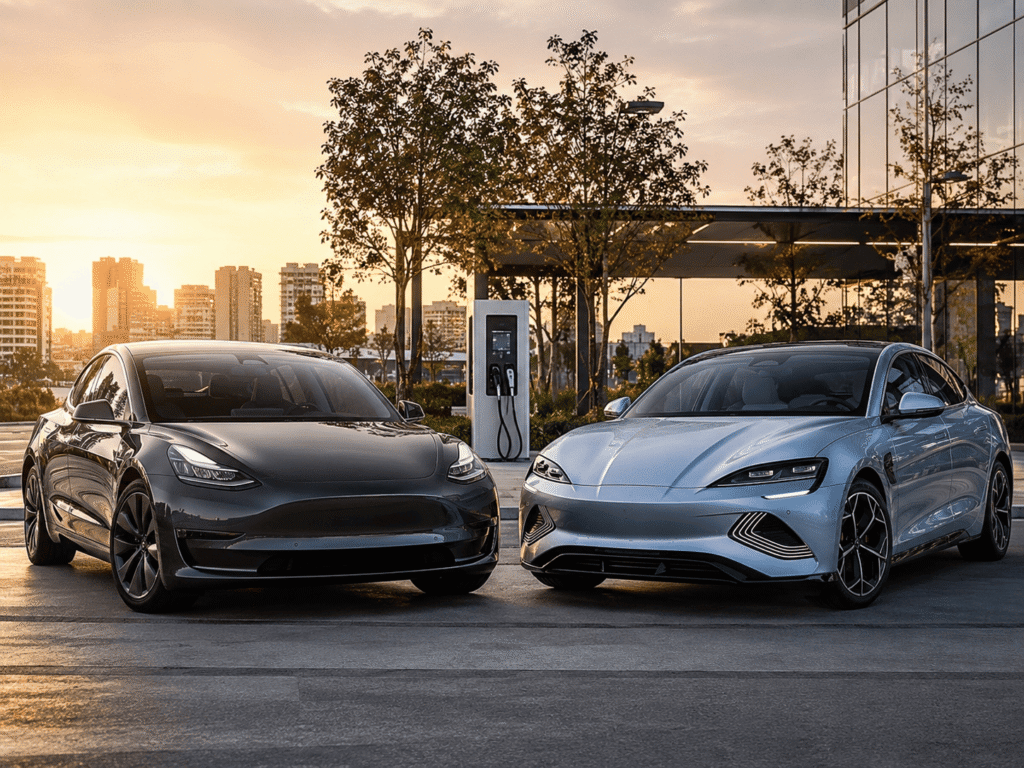
Tesla Model 3 vs BYD Seal: compare range, price, performance, charging, interior, comfort, software, battery tech, and value to see which electric sedan is better.
Tesla Model 3 vs BYD Seal: Which Electric Sedan Should You Buy in 2026?
The Tesla Model 3 and BYD Seal are two of the most talked-about electric sedans in the world right now. Both are stylish, fast, practical enough for daily use, and built by two of the biggest names in the EV industry. Tesla is known for software, charging, performance, and global EV brand power. BYD is known for battery technology, value, comfort, and fast growth.
For buyers, this comparison is interesting because both cars try to solve the same problem in different ways. The Tesla Model 3 feels like a clean, software-first electric car. The BYD Seal feels like a more traditional premium sedan with strong features, a comfortable cabin, and BYD’s Blade Battery technology.
So, which one should you buy in 2026? The simple answer is this: choose the Tesla Model 3 if you want the better charging ecosystem, stronger software experience, and a more established EV identity. Choose the BYD Seal if you want more value, a richer equipment list in many markets, a comfortable cabin, and strong battery technology.
But the real answer depends on where you live, what the local price is, which trim is available, how good charging access is, and what kind of driving experience you prefer.
Why This Comparison Matters
Tesla and BYD are not small EV brands anymore. Tesla helped make electric cars desirable worldwide, while BYD has become one of the strongest EV and battery companies globally. The Model 3 and Seal show the difference between these two brands very clearly.
The Tesla Model 3 is one of the most recognized electric cars in the world. It has a simple design, strong efficiency, a clean cabin, good performance, and access to Tesla’s charging and software ecosystem. Tesla’s biggest strength is that the car feels deeply connected to the brand’s digital experience.
The BYD Seal is one of the strongest Chinese electric sedans to challenge Tesla directly. It offers strong range, premium-looking design, good performance, a comfortable interior, and BYD’s Blade Battery technology. In many markets, it also gives buyers a lot of features for the money.
This is not just a car comparison. It is also a comparison between two EV philosophies: Tesla’s software-first simplicity versus BYD’s value-packed premium approach.
1. Exterior Design
The Tesla Model 3 has a clean and simple design. It does not try to look overly aggressive. The front is smooth, the body is aerodynamic, and the overall shape is easy to recognize. Tesla’s design approach is minimal, and that is part of the car’s identity.
The BYD Seal looks more dramatic. It has a sporty shape, sharp lighting, and a more emotional design language. It feels slightly more like a traditional premium sedan, with a lower, wider stance and a more detailed exterior.
Which one looks better depends on taste. If you like simple, clean design, the Model 3 may appeal more. If you prefer a sportier and more stylish look, the BYD Seal may feel more exciting.
Winner for clean design: Tesla Model 3.
Winner for sporty style: BYD Seal.
2. Interior and Comfort
Inside, the Tesla Model 3 is extremely minimal. Almost everything is controlled through the central touchscreen. There are very few physical buttons, and the cabin feels open and simple. Some buyers love this because it feels modern and uncluttered. Others may find it too plain or too dependent on the screen.
The BYD Seal has a more traditional premium interior feel. It usually offers a larger rotating-style infotainment screen, a more detailed dashboard, more visible cabin design elements, and a comfort-focused layout. In many markets, the Seal also feels well-equipped for the price, with features like a panoramic roof and premium audio depending on trim.
For comfort, the BYD Seal may feel more familiar to buyers switching from petrol sedans. The Tesla Model 3 feels more futuristic, but it may take time to get used to the touchscreen-heavy controls.
Winner for minimalist tech cabin: Tesla Model 3.
Winner for traditional comfort feel: BYD Seal.
3. Range
Range is one of the biggest things buyers compare. Tesla’s official figures vary by market and trim. Tesla’s Canadian Model 3 page lists the rear-wheel-drive Model 3 Premium at 463 km EPA-estimated range, while U.S. and other market figures can differ by version. BYD Australia lists the Seal Premium at 570 km WLTP range, and BYD UK lists the 2026 Seal Design trim at 354 miles WLTP range.
This is where buyers must be careful. EPA and WLTP are different testing systems, so the numbers are not always directly comparable. WLTP figures are often higher than real-world results, while EPA can be closer to real-world driving in many cases. Real range also depends on speed, weather, tyres, driving style, passengers, and climate control.
Both cars offer enough range for daily use and many road trips. The better choice depends on your local trim and testing standard.
Winner: depends on market and trim.
4. Performance
Both cars are quick enough for normal drivers. The Tesla Model 3 has always been known for smooth acceleration and instant response. Even non-performance versions feel quick in daily driving because electric torque arrives immediately.
The BYD Seal is also strong. BYD Australia lists the Seal Premium at 230 kW and 0–100 km/h in 5.9 seconds, while performance versions in some markets are much quicker. BYD UK lists the 2026 Seal Design at 5.9 seconds 0–62 mph.
Tesla usually feels sharper and more software-focused in the way it delivers performance. The BYD Seal feels smooth and confident, with a more comfort-oriented premium sedan feel in normal trims.
Winner for sporty EV feel: Tesla Model 3.
Winner for smooth premium driving: BYD Seal.
5. Charging
Charging is one of Tesla’s biggest advantages. In many markets, Tesla’s Supercharger network and route planning make long-distance EV driving easier. The car can plan charging stops, show battery estimates, and connect with Tesla’s charging system smoothly.
BYD Seal can also charge quickly, and BYD UK media says the 2026 Seal has 150 kW peak rapid charging and can charge from 10–80% in 37 minutes. That is useful, but the charging experience depends more heavily on public charging networks in your country.
This is where Tesla may still feel easier for beginners, especially in markets where Superchargers are strong. BYD can be very practical, but you may need to rely more on third-party charging apps and networks.
Winner for charging ecosystem: Tesla Model 3.
Winner for decent fast charging with value: BYD Seal.
6. Battery Technology
BYD has a major strength in battery technology. The Seal uses BYD’s Blade Battery, which is based on LFP chemistry. BYD UK media describes the 2026 Seal’s Blade Battery as cobalt-free LFP chemistry with 82.5 kWh capacity.
LFP batteries are popular because they can be durable, stable, and cost-effective. They may not always have the highest energy density compared with some other chemistries, but they are very practical for everyday EV use.
Tesla also uses different battery chemistries depending on market and trim. Tesla’s strength is not only the battery pack itself, but the full system around it: energy efficiency, software management, route planning, and charging integration.
Winner for battery manufacturing identity: BYD Seal.
Winner for software and energy ecosystem: Tesla Model 3.
7. Technology and Software
This is where Tesla usually feels stronger. The Model 3 is built around software. The interface, app, updates, route planning, charging integration, and vehicle settings all feel deeply connected. Tesla’s software experience is one of the biggest reasons many buyers choose the brand.
The BYD Seal also has plenty of technology. It offers a large infotainment screen, modern driver-assistance features, digital displays, and connected features depending on market. BYD UK highlights a 15.6-inch infotainment touchscreen on the Seal.
Still, Tesla’s software experience generally feels more mature and more central to the car. BYD offers strong features, but Tesla has the stronger software-first identity.
Winner for software: Tesla Model 3.
Winner for feature value: BYD Seal.
8. Practicality
Both cars are practical sedans for daily use. The Tesla Model 3 has a useful cargo setup, including front and rear storage, and Tesla’s Canadian page lists cargo capacity at 682 liters for the Model 3 Premium.
The BYD Seal is also practical, though it feels more like a traditional sedan. It has a comfortable cabin and usable boot space. Carsales lists BYD Seal boot space at 400 liters in its 2026 pricing and specifications coverage.
For cargo flexibility, Tesla may have the edge. For rear-seat comfort and traditional sedan feel, some buyers may prefer BYD.
Winner for cargo practicality: Tesla Model 3.
Winner for traditional sedan comfort: BYD Seal.
9. Price and Value
Pricing depends heavily on country. Tesla lists the Model 3 starting at $38,630 in the U.S., including destination and order fees but excluding taxes and other fees. BYD UK lists the 2026 Seal Design at £45,730 and Excellence at £48,730, while Australian pricing varies by trim and local on-road costs.
The Tesla Model 3 often looks attractive where Tesla pricing is aggressive and charging support is strong. The BYD Seal often looks attractive where it offers more standard features, a premium cabin feel, and competitive pricing against Tesla.
In many markets, BYD’s biggest strength is value. Tesla’s biggest strength is the ecosystem.
Winner for ecosystem value: Tesla Model 3.
Winner for equipment-per-money value: BYD Seal.
10. Which One Is Better for Beginners?
For first-time EV buyers, the Tesla Model 3 may feel easier if your area has strong Tesla charging access. Tesla’s route planning and charging ecosystem reduce stress, especially for road trips.
The BYD Seal may be better if you want a more traditional car feel, a comfortable interior, strong equipment, and good value. It may also appeal to people who do not want a cabin that depends too heavily on one central screen.
Choose Tesla Model 3 if you want:
-
Better charging ecosystem in many markets
-
Stronger software experience
-
Minimalist interior
-
Recognized EV brand
-
Good cargo practicality
-
Smooth route planning
Choose BYD Seal if you want:
-
Strong value
-
Premium-feeling cabin
-
Sportier exterior design
-
Blade Battery technology
-
More traditional controls and comfort feel
-
Strong feature list for the money
Final Verdict
The Tesla Model 3 and BYD Seal are both excellent electric sedans, but they are built for slightly different buyers.
The Tesla Model 3 is the better choice if you want a clean software-first EV with strong charging support, a simple cabin, sharp performance, and the confidence of Tesla’s established EV ecosystem. It is especially strong for people who travel often, value software, and want an EV that feels deeply connected to route planning and charging.
The BYD Seal is the better choice if you want a stylish electric sedan with a more premium traditional cabin, strong standard features, Blade Battery technology, and excellent value in markets where BYD pricing is competitive. It feels more like a regular premium sedan that happens to be electric.
If you are choosing with your head, compare local prices, charging access, warranty, and trim features. If you are choosing based on driving lifestyle, Tesla is better for software and charging convenience, while BYD is better for comfort and value.
In simple words: Tesla Model 3 is the smarter tech ecosystem choice. BYD Seal is the stronger value and comfort choice.
6) FAQ Section
Q1: Is Tesla Model 3 better than BYD Seal?
Tesla Model 3 is better if you want stronger software, easier route planning, and Tesla’s charging ecosystem. BYD Seal is better if you want value, comfort, and a premium-feeling cabin.
Q2: Which has better range, Tesla Model 3 or BYD Seal?
It depends on market and trim. Tesla and BYD use different official test cycles in different countries, so compare local EPA or WLTP figures before buying.
Q3: Which is better for beginners?
Tesla Model 3 may be easier for beginners where Tesla Superchargers are strong. BYD Seal may be better for beginners who want a more traditional cabin and strong standard features.
Q4: Does BYD Seal use Blade Battery?
Yes. BYD UK media says the 2026 Seal uses BYD’s Blade Battery with cobalt-free LFP chemistry.
Q5: Which is better value for money?
BYD Seal often gives strong equipment for the money, while Tesla Model 3 gives strong value through software, charging support, and brand ecosystem.