
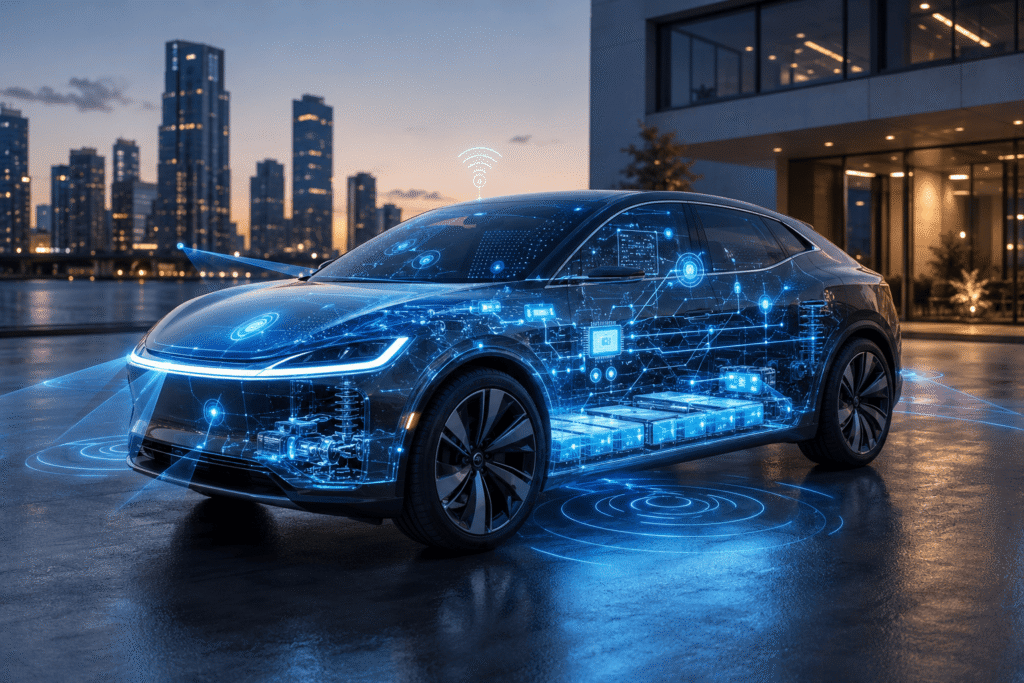
What is a software-defined vehicle? Learn how SDVs use software, OTA updates, connected features, smart systems, and centralized computing to make modern cars more flexible.
What Is a Software-Defined Vehicle? A Simple Guide for Beginners
Cars are changing fast. In the past, most people judged a car by its engine, gearbox, body shape, fuel economy, comfort, and price. Those things still matter, but modern cars are becoming more digital. Today, software is starting to control more of the driving experience than ever before.
That is where the term software-defined vehicle comes in. It sounds technical, but the basic idea is simple. A software-defined vehicle, often called an SDV, is a car where many features and functions are controlled, improved, or changed through software.
Think about your smartphone. When you buy a phone, it does not stay exactly the same forever. It can receive updates. New features can arrive. Apps can improve. Security patches can fix problems. The design of the phone hardware may stay the same, but the software keeps changing the experience.
A software-defined vehicle works in a similar direction. The car still has wheels, brakes, motors, seats, lights, and hardware. But more of the car’s behavior is controlled by software. That means the vehicle can improve over time, receive updates, add features, fix bugs, and become more personalized.
What Does Software-Defined Vehicle Mean?
A software-defined vehicle is a vehicle where software plays a central role in how the car works. In older cars, most systems were fixed when the car left the factory. If you wanted a new feature, you usually had to buy a new model or visit a workshop for a physical upgrade.
In an SDV, the car is designed with software updates and digital control in mind. That means features can be adjusted, improved, or added after purchase. Some updates may improve the infotainment system. Others may improve battery management, driver assistance, charging, navigation, climate control, performance, or safety features.
This does not mean hardware is unimportant. Hardware still matters a lot. Brakes, tyres, sensors, cameras, battery packs, motors, and computers all need to be strong and reliable. But the difference is that software becomes the layer that connects and controls many of these systems.
In simple words, a software-defined vehicle is a car that can keep getting smarter after you buy it.
How Is It Different from a Normal Car?
A traditional car is mostly hardware-defined. The features you get are usually the features the car has for most of its life. If the car does not have a certain function, you usually cannot add it easily later.
For example, an older car’s dashboard, engine behavior, driving modes, safety features, and infotainment system are mostly fixed. Updates are limited, and many changes require a mechanic or new parts.
A software-defined vehicle is different because it is built around a digital platform. It can receive over-the-air updates, just like a phone or laptop. The automaker can send improvements remotely. The car can also collect data, communicate with cloud services, and support connected features.
This is why many modern EVs feel more digital than older cars. Electric vehicles are often easier to design as software-defined vehicles because they already use advanced electronics, battery management systems, connected charging tools, and digital dashboards.
What Are OTA Updates?
OTA stands for over-the-air. An OTA update is a software update sent to the car wirelessly. You do not always need to visit a service center. The car can download and install updates through an internet connection.
OTA updates can do different things. They can fix software bugs, improve the touchscreen, update maps, add app features, improve charging behavior, adjust driver-assistance systems, or improve energy efficiency.
For drivers, OTA updates can be very useful. Instead of waiting for a new car model, your current car may get better with time. This is one of the biggest attractions of software-defined vehicles.
But OTA updates must also be safe and secure. A car is not just a phone. If software affects driving systems, safety must come first. That is why cybersecurity, testing, and software update regulations are very important for SDVs.
Why Are Automakers Moving Toward SDVs?
Automakers are moving toward software-defined vehicles because customers now expect cars to feel modern, connected, and upgradable. People are used to phones, smart TVs, apps, and computers that improve through updates. They now expect cars to offer a similar experience.
There is also a business reason. Software allows automakers to offer new services, subscriptions, apps, connected features, and digital upgrades. For example, a car company may allow owners to activate certain features later, pay for advanced navigation, upgrade driver-assistance functions, or add comfort features through software.
From the automaker’s side, SDVs can also make development more efficient. Instead of building every feature into separate hardware systems, companies can use centralized computing platforms and shared software architectures. That can reduce complexity over time and make future updates easier.
For the driver, the benefit should be simple: a car that feels smarter, more flexible, and more personal.
Examples of Software-Defined Vehicle Features
Software-defined vehicles can include many different features. Some are already common, while others are still developing.
A modern SDV may offer:
-
Over-the-air software updates
-
Digital dashboards
-
Connected navigation
-
Real-time charging information
-
Smart route planning
-
Driver assistance updates
-
App-based vehicle control
-
Remote climate control
-
Battery management improvements
-
Voice assistant features
-
Personalized driver profiles
-
Subscription-based features
-
Smart diagnostics
-
Predictive maintenance alerts
The key point is that these features are not only controlled by physical buttons and fixed hardware. They are connected to software that can be improved and adjusted.
Why SDVs Matter for Electric Cars
Software-defined vehicles are especially important for electric cars. EVs depend heavily on software for battery management, charging, range estimates, regenerative braking, route planning, thermal management, and energy efficiency.
A good EV is not just a battery and motor. It is a complete software system. The car needs to know how much energy it has, how far it can go, where chargers are, how fast it can charge, how to protect the battery, and how to manage performance.
This is one reason Tesla became famous in the EV market. Many people saw Tesla not only as a car company but also as a software company. Other automakers are now moving in the same direction.
As more EVs arrive, software quality will become a major difference between good and average electric cars. Two cars may have similar battery sizes, but the one with better software may offer better range estimates, smoother charging, easier navigation, and a better ownership experience.
Benefits of Software-Defined Vehicles
The biggest benefit of an SDV is flexibility. The car does not have to stay exactly the same after purchase. It can receive improvements, bug fixes, new features, and better digital services.
Another benefit is personalization. Drivers may be able to set up profiles for seat position, climate settings, driving modes, infotainment layout, and preferred routes. When the car recognizes the driver, it can adjust automatically.
SDVs can also make maintenance smarter. The car may detect issues early and send alerts before something becomes a serious problem. This can help owners fix problems sooner and avoid unexpected breakdowns.
For EV owners, software can improve charging, range management, and battery health. Good software can make the car easier to use every day.
Risks and Problems with SDVs
Software-defined vehicles also bring challenges. The first big challenge is cybersecurity. A connected car must be protected from hacking, data theft, and unsafe software changes. The more connected a car becomes, the more important security becomes.
Privacy is another concern. Modern cars can collect location data, driving behavior, charging habits, app usage, and other information. Automakers need clear rules about how this data is stored, used, and protected.
Another concern is subscriptions. Some buyers may not like the idea of paying extra to unlock features already built into the car. If automakers go too far with subscription pricing, customers may feel frustrated.
There is also the issue of long-term support. If a car depends heavily on software, the automaker must keep supporting it for many years. Buyers will want to know whether updates, security patches, and digital services will continue after the car gets older.
Are Software-Defined Vehicles Safe?
A software-defined vehicle can be safe, but safety depends on how well the automaker designs, tests, and protects the software. Cars are safety-critical machines, so updates must be handled carefully.
This is why regulations for cybersecurity and software updates are becoming more important. Vehicle software cannot be treated casually. It must go through testing, validation, and secure update processes.
Drivers should also keep their vehicle software updated, just like they update a phone or computer. Updates can improve features, but they may also fix security issues.
Will All Cars Become Software-Defined?
Many future cars will become more software-defined, especially electric cars and premium vehicles. The trend is already clear. Automakers are investing in centralized computing, connected services, over-the-air updates, and digital platforms.
However, not every car will become fully software-defined at the same speed. Budget cars may have fewer software features. Some markets may adopt connected cars more slowly because of infrastructure, cost, or regulation.
Still, the direction is clear. Cars are becoming more like rolling computers, and software will play a bigger role in how they drive, charge, communicate, and improve.
Final Verdict
A software-defined vehicle is a car where software controls and improves many important features. Instead of staying exactly the same after purchase, the car can receive updates, add features, improve performance, and become more personalized over time.
For drivers, the idea is simple: a software-defined vehicle can keep getting better after you buy it.
This does not mean hardware no longer matters. A car still needs strong engineering, good safety, reliable brakes, quality batteries, durable motors, and comfortable design. But software is becoming the brain that connects everything.
The future of cars will not only be electric. It will also be digital. And software-defined vehicles are one of the biggest signs of that change.
6) FAQ Section
Q1: What is a software-defined vehicle?
A software-defined vehicle is a car where many functions are controlled, updated, and improved through software instead of being fixed only by hardware.
Q2: What does SDV stand for?
SDV stands for Software-Defined Vehicle.
Q3: Are software-defined vehicles only electric cars?
No. Petrol, hybrid, and electric cars can all use software-defined technology, but EVs often use it more heavily because they already depend on digital battery, charging, and energy systems.
Q4: What are OTA updates in cars?
OTA updates are wireless software updates sent to the car through the internet. They can improve features, fix bugs, update maps, or improve vehicle systems.
Q5: Are software-defined vehicles safe?
They can be safe if the automaker uses strong cybersecurity, careful testing, secure update systems, and long-term software support.