
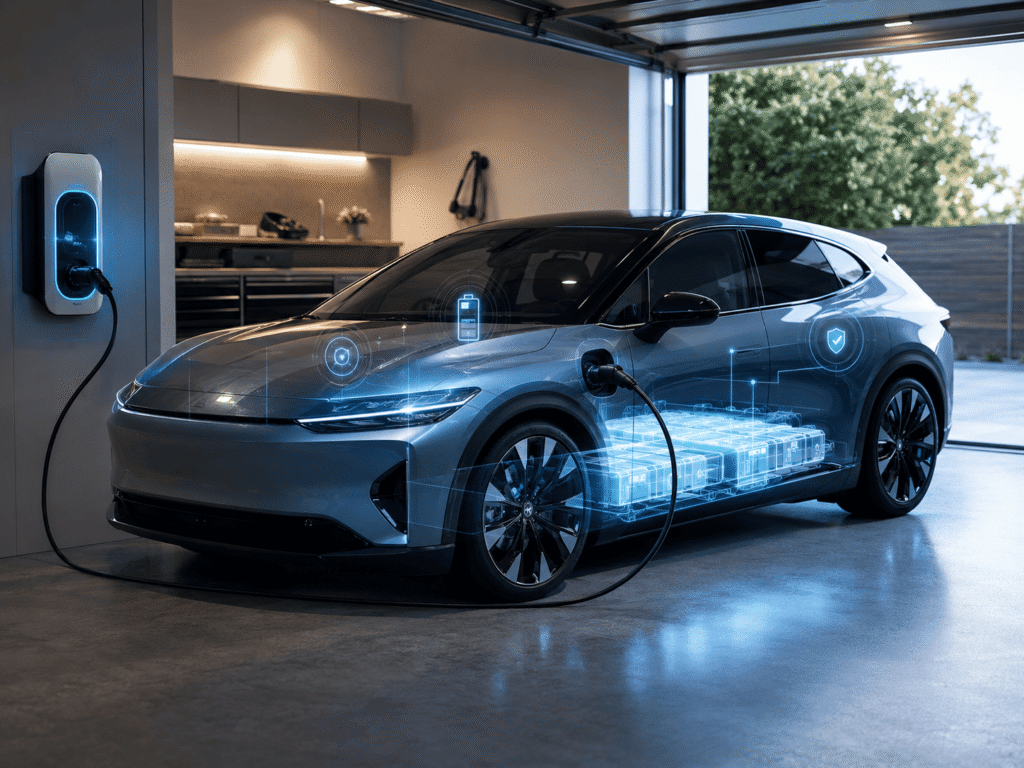
EV battery life explained simply. Learn how long electric car batteries last, why batteries degrade, what affects range, warranty coverage, replacement cost, and tips to extend battery life.
EV Battery Life Explained: How Long Do Electric Car Batteries Last?
For many people thinking about buying an electric car, the biggest worry is not the motor, the screen, or even the charging station. The biggest worry is the battery. People often ask the same question: how long does an EV battery really last?
That is a fair question. The battery is the most expensive and most important part of an electric car. It controls how far the car can drive, how quickly it charges, how much value the car keeps, and how confident you feel owning it for many years.
The good news is that modern EV batteries usually last much longer than many people expect. They do not suddenly become useless after a few years. Instead, they slowly lose some capacity over time, just like a phone battery, but on a much larger and more carefully managed scale.
Most EV owners will not need to replace the battery during normal ownership. Battery degradation is real, but it is usually gradual. With normal driving and sensible charging habits, many electric car batteries can last well over a decade.
This guide explains EV battery life in a simple way, without confusing technical language.
What Is an EV Battery?
An EV battery is the large rechargeable battery pack that stores electricity for an electric car. Instead of using petrol or diesel, the car uses energy stored in the battery to power an electric motor.
Most modern electric cars use lithium-ion battery technology. Some use different chemistry types, such as NMC, NCA, or LFP. You do not need to memorize those names as a beginner, but it helps to know that battery chemistry affects cost, durability, charging, range, and performance.
The battery pack is not just a group of cells. It also includes cooling systems, protective structures, sensors, electronics, and a battery management system. This system monitors temperature, charging, discharging, voltage, and battery health. Its job is to protect the battery and help it last longer.
In simple words, an EV battery is the energy tank of an electric car, but it is much smarter than a normal fuel tank.
How Long Do EV Batteries Last?
Most modern EV batteries are expected to last many years. In many markets, electric car batteries commonly come with warranties around 8 years or 100,000 miles. That does not mean the battery dies after that. It only means the manufacturer is confident enough to cover the battery for that period.
Research and real-world data suggest that many EV batteries can last 12 to 16 years or even longer under normal use. Battery life depends on the car, battery chemistry, climate, charging habits, mileage, and how the vehicle is managed.
For normal drivers, the battery will usually last long enough for everyday ownership. If you buy a new EV and keep it for five to eight years, battery failure is not something you should automatically expect. The battery may lose some range, but it should still be useful.
Think of battery life like tyre wear, but much slower. It changes gradually, not suddenly.
What Is Battery Degradation?
Battery degradation means the battery slowly loses some ability to store energy. When a new EV has a range of 300 miles, it may not still have the exact same 300-mile range after several years. It may drop to 285 miles, 270 miles, or another number depending on use.
This does not mean the car is broken. It simply means the battery has aged.
All rechargeable batteries degrade over time. Your phone battery does the same thing. The difference is that EV batteries are much larger, better cooled, and managed by advanced software. That is why they usually last much longer than phone batteries.
Battery degradation is usually fastest in the early years and then slows down. Many EVs lose a small amount of capacity at first, then settle into a slower degradation pattern.
Why Do EV Batteries Degrade?
EV batteries degrade for several reasons. Some are related to age, and some are related to use.
The main causes include:
-
High temperatures
-
Very frequent fast charging
-
Keeping the battery at 100% for long periods
-
Letting the battery sit near 0% for long periods
-
Very high mileage
-
Heavy towing or hard driving
-
Poor battery cooling
-
Battery chemistry differences
-
Natural aging over time
Heat is one of the biggest enemies of battery life. Batteries do not like staying very hot for long periods. This is why good thermal management is important.
Charging habits also matter. Fast charging is useful, especially on road trips, but using it all the time can add stress to the battery. Most owners should use slower home or Level 2 charging for daily use and save DC fast charging for longer trips.
Does Fast Charging Damage the Battery?
Fast charging does not instantly ruin an EV battery. Modern EVs are designed to handle fast charging, and the battery management system controls charging speed to protect the battery.
However, frequent DC fast charging can increase battery stress, especially in hot conditions or when charging to high levels often. That does not mean you should avoid fast charging completely. It simply means you should use it when needed, not as your only charging method every day if you have a better option.
For most owners, the best routine is simple: charge at home or work for daily use, and use fast charging for road trips.
Should You Charge an EV to 100%?
This depends on the battery type and the car’s recommendation. Many EVs with NMC or NCA battery chemistry are happiest when charged to around 80% for daily use. Charging to 100% is usually fine before a long trip, but keeping the car at 100% every day is not ideal for long-term battery health.
Some EVs with LFP batteries are more comfortable with regular full charges, and manufacturers may even recommend charging to 100% periodically for calibration. That is why it is important to follow your car’s owner manual.
A simple rule for many EV owners is this: for daily driving, keep the battery somewhere around 20% to 80% when possible. Before a road trip, charging to 100% is okay.
Is It Bad to Let the Battery Go to 0%?
Yes, letting an EV battery sit at very low charge for a long time is not good. Modern EVs have protection buffers, so 0% on the dashboard usually does not mean the battery is absolutely empty. But it is still better not to make a habit of running the battery very low.
If you reach a low battery level during a trip, charge as soon as practical. Do not leave the car parked for days or weeks at very low charge.
For long-term parking, many manufacturers recommend leaving the battery at a moderate charge level, not full and not empty.
How Much Range Will an EV Lose Over Time?
The exact range loss depends on the model and driving conditions. Some EVs lose very little range over several years. Others lose more, especially older models with weaker battery cooling.
Recent real-world tracking has shown that many modern EVs retain a high percentage of their range after several years. That is encouraging for buyers, especially people worried about used EVs.
As a simple example, if a car had 300 miles of range when new and retained 95% after five years, it would still have around 285 miles. For many drivers, that is still more than enough for daily use.
The key point is that battery degradation is usually gradual. It does not mean the car suddenly becomes unusable.
EV Battery Warranty Explained
Battery warranties are very important because they protect buyers from major battery problems. Many EVs include a battery warranty of around 8 years or 100,000 miles, although the exact terms vary by manufacturer and country.
Some warranties only cover total failure. Others also cover excessive capacity loss, such as the battery dropping below a certain percentage of original capacity during the warranty period.
Before buying an EV, check:
-
Battery warranty length
-
Mileage limit
-
Capacity retention guarantee
-
What counts as warranty failure
-
Whether the warranty transfers to a second owner
-
Conditions that can void the warranty
This is especially important when buying a used EV.
How Much Does EV Battery Replacement Cost?
EV battery replacement can be expensive, but most owners will not need to replace the battery during normal ownership. Cost depends on the vehicle, battery size, battery chemistry, labor, and whether a full pack or smaller module can be replaced.
The important thing is not to panic about battery replacement. Modern EV battery failures are relatively rare compared with common fears. Also, battery costs have been improving over time, and recycling, repair, and refurbishment options are expected to grow.
If you are buying a used EV, it is smarter to check battery health rather than simply worry about replacement cost.
How to Extend EV Battery Life
You can help your EV battery last longer with a few simple habits:
-
Avoid leaving the battery at 100% for long periods unless the manual recommends it
-
Avoid leaving the battery near 0% for long periods
-
Use home or Level 2 charging for daily charging when possible
-
Save DC fast charging for road trips or when needed
-
Park in shade or cooler places during extreme heat
-
Precondition the battery before fast charging if your car supports it
-
Keep software updated
-
Follow the manufacturer’s battery care advice
-
Avoid unnecessary hard acceleration all the time
-
Do not ignore battery or charging warnings
You do not need to treat the car like something fragile. EVs are built for daily use. Just avoid extreme habits when you can.
What About Used EV Battery Life?
Used EV battery life is one of the most important things to check before buying. A used EV can be a great deal if the battery is healthy, but you should not buy only based on price.
Before buying a used EV, check:
-
Battery health report if available
-
Real-world range estimate
-
Warranty status
-
Charging history if available
-
Fast-charging frequency if available
-
Service history
-
Software updates
-
Any battery-related recalls
-
Whether the battery warranty transfers
A used EV with 90% battery health can still be very useful. The key is knowing what you are buying.
Do EV Batteries Work Well in Hot or Cold Weather?
Temperature affects EV batteries. Cold weather can reduce driving range because the battery works less efficiently and the car uses energy for heating. Hot weather can also stress the battery if the car is parked or used in high temperatures for long periods.
Modern EVs use thermal management systems to help control battery temperature. Cars with better cooling and heating systems usually handle temperature changes better.
If you live in a very hot or very cold area, check real-world owner experiences for the specific EV you are considering.
What Happens to EV Batteries After Car Use?
An EV battery does not always go straight to waste after it is no longer ideal for car use. Batteries can sometimes be reused for stationary energy storage, refurbished, repaired, or recycled.
Battery recycling is becoming more important as more EVs enter the market. Valuable materials such as lithium, nickel, cobalt, copper, and other metals can be recovered. This helps reduce waste and supports future battery production.
The recycling industry still needs to grow, but it is becoming a major part of the EV ecosystem.
Final Verdict
EV battery life is much better than many people think. A modern electric car battery does not usually die after a few years. It slowly loses some capacity over time, but many batteries can last well beyond the warranty period.
For most drivers, the real question is not “Will the battery suddenly fail?” The better question is “Will the battery still provide enough range for my daily life after several years?” In most modern EVs, the answer is yes.
If you charge sensibly, avoid extreme habits, keep the car updated, and follow the manufacturer’s guidance, an EV battery can last many years and thousands of miles.
The simplest way to think about it is this: EV batteries age, but they are built to last. For normal drivers, battery life should not be a reason to avoid electric cars.
6) FAQ Section
Q1: How long do EV batteries last?
Many modern EV batteries are expected to last around 8–16 years depending on use, climate, battery chemistry and charging habits. NREL research notes some experts expect EV batteries to perform 2–6 years beyond warranty, giving about 12–16 years of in-vehicle life.
Q2: Do EV batteries need to be replaced after 8 years?
Not usually. The 8-year figure is often a warranty period, not a death date. Many EV batteries continue working well after warranty, though with some gradual range loss.
Q3: How much range does an EV lose over time?
It varies by model and use. Recent Recurrent-tracked data reported by Autoweek found average EVs retained about 97% of range after three years and 95% after five years.
Q4: Is fast charging bad for EV battery life?
Fast charging is fine when needed, but using DC fast charging all the time can add more stress than slower home or Level 2 charging, especially in hot conditions.
Q5: How can I make my EV battery last longer?
Avoid keeping the battery at 100% or near 0% for long periods, use slower charging for daily use when possible, keep software updated, park away from extreme heat when practical, and follow your car’s owner manual.